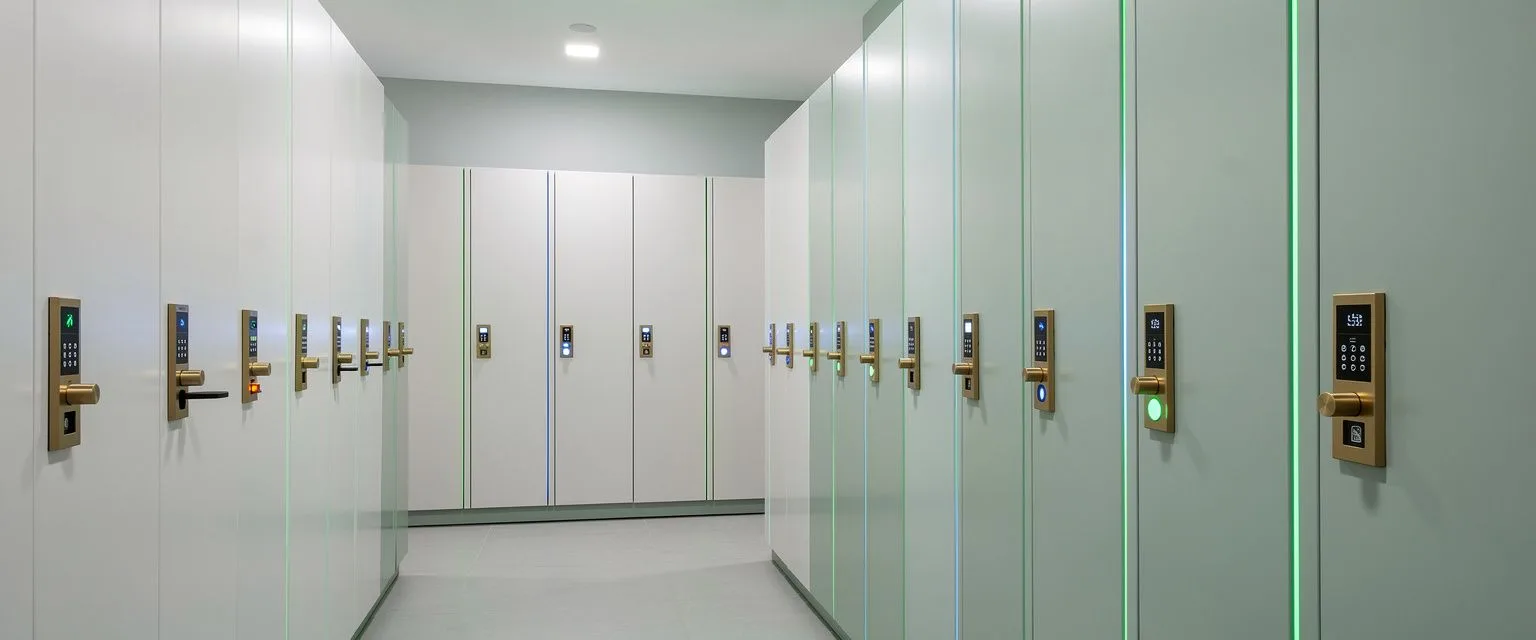
How to Choose Locker Locks for Gyms and Schools?
When selecting locker locks for gyms and schools, the first decision point is not the brand but the usage model: whether the facility uses shared lockers (users pick any available locker and change each time) or assigned lockers (fixed users with dedicated lockers). For shared lockers, keyless combination locks are preferred to reduce the cost of lost keys. For assigned lockers, RFID or Bluetooth locks can be considered to support tiered access permissions. The second decision point is environmental stress—humidity and salt spray in pools, showers, and outdoor corridors will quickly eliminate locks without proper anti-corrosion treatment. The third decision point is the management backend—whether master keys can be quickly reissued if lost, and whether administrators can override forgotten passwords. These two processes determine the long-term labor costs of maintenance.
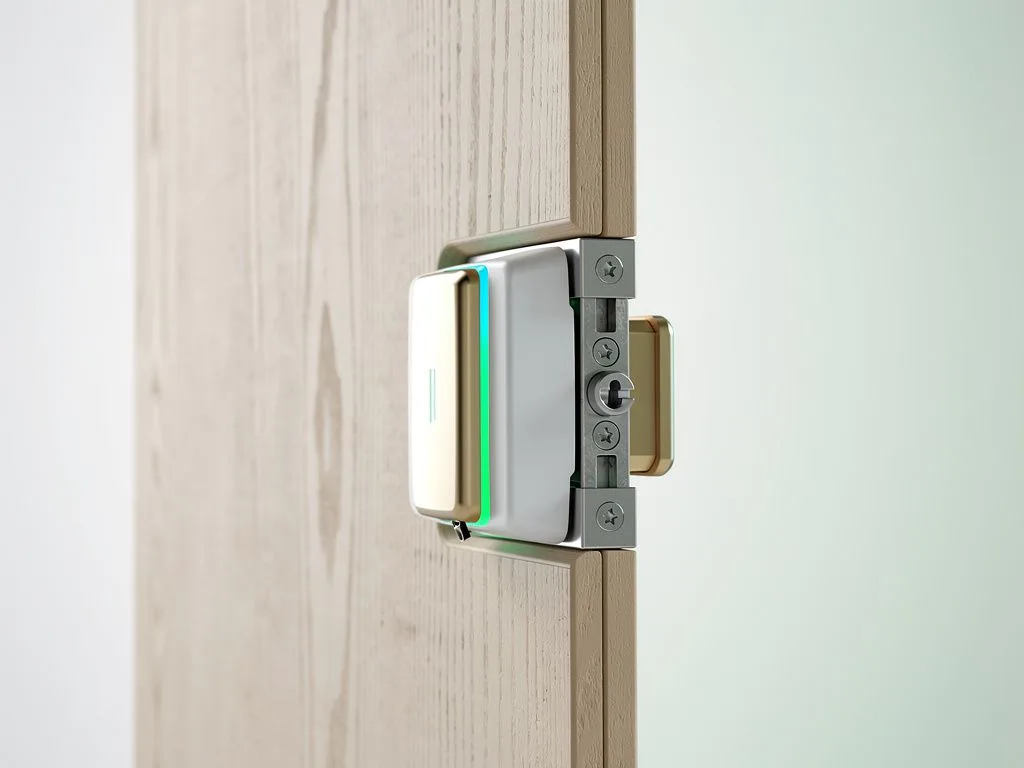
Key Takeaways
Choose locks based on usage patterns first
Shared spaces are suitable for keyless combination locks, while assigned spaces can use RFID or Bluetooth locks. Choosing the wrong type can lead to excessive card issuance costs or loss of audit capability.
Humid environments require anti-corrosion treatment
In humid areas such as pools and shower rooms, carbon steel chrome-plated lock bodies are prone to rust within six to twelve months. Stainless steel or zinc alloy should be selected, and salt spray test hours should be confirmed.
Tamper resistance and corrosion resistance must be addressed together
For public spaces, locks must be verified for shackle shear resistance, impact resistance, and cylinder anti-pick rating. However, if thicker steel plates are not treated with a coating, corrosion in humid environments will be faster.
Evaluate based on total cost of ownership
For large-scale deployment, do not only consider unit price. The five-year TCO for mechanical locks is approximately 1.5 to 2 times the initial purchase cost, while electronic locks require additional battery and backend licensing fees.
What Are the Design Differences Between Locks for Shared and Assigned Lockers?
Shared lockers have different users each day and different locker assignments each time, so the locks must support keyless operation and automatic clearing after a one-time password is used. Mechanical combination locks are the lowest cost for this scenario, but their drawback is that they cannot record who used a locker and when, leaving management without an audit trail in case of disputes. Assigned lockers are used by fixed students or members, so the locks can be tied to personal credentials such as RFID cards, Bluetooth phones, or NFC tags. The advantage is that the management backend can query opening records item by item and revoke access with one click when a membership expires or a student leaves. When purchasing, first confirm which category the facility falls into, then decide on the lock type. Otherwise, installing assigned-type locks in a shared facility will result in high daily card issuance costs, while installing shared-type locks in an assigned facility will lose audit capability.
For Locker Locks in Humid Environments, What Material and Anti-Corrosion Details Should You Check?
For lockers in pools, bathrooms, seaside gyms, or outdoor corridors, the locks are exposed to moisture and chlorine for long periods. Carbon steel locks with chrome plating typically develop rust spots within six to twelve months, and in severe cases, they can seize and fail to open. When purchasing, confirm that the lock body and internal springs are made of stainless steel or zinc alloy, and request written documentation from the supplier on the salt spray test hours (confirm based on actual specifications). Another often-overlooked detail is the sealing of the combination dial or keypad—if a keypad lock lacks silicone ring waterproofing, sweat and moisture can seep into the circuit board and cause key failure. Locks for humid environments typically cost 20% to 30% more than those for dry environments, but this is a necessary cost rather than a premium, because the labor and downtime costs of frequent lock replacement far exceed this.

For Locks in Public Spaces, What Indicators Should You Look at for Tamper Resistance?
Lockers in public spaces face not typical home use but high-intensity threats such as deliberate vandalism, lock picking, and cutting shackles. To assess tamper resistance, buyers should request three pieces of information from the supplier: the shackle shear resistance (in kN or kg), the lock body impact test results, and the cylinder anti-pick rating. For areas like gym locker rooms with camera coverage, a medium tamper resistance level is usually sufficient. However, for areas with many blind spots, such as school gymnasiums or underground parking lots, heavy-duty lock bodies with higher shear resistance are recommended. It is important to note that tamper-resistant design often conflicts with anti-corrosion design—thicker steel plates increase shear resistance, but if the surface coating is not treated simultaneously, corrosion in humid environments will actually accelerate. When purchasing, require the supplier to explain both indicators rather than providing only a single data point.
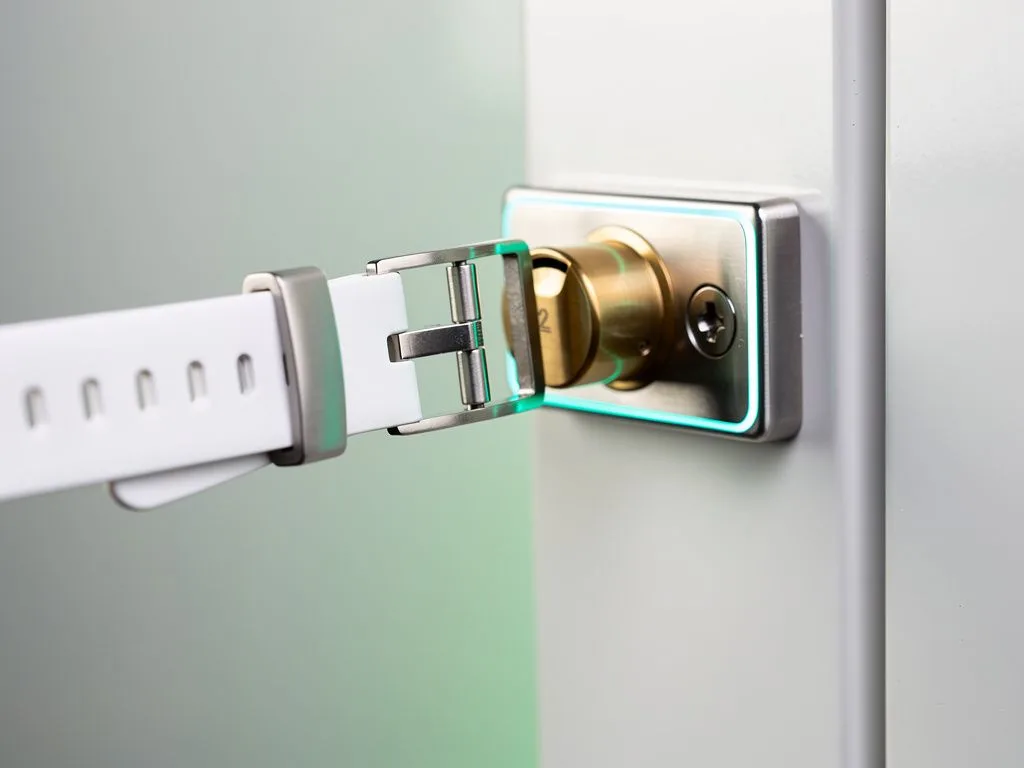
Master Key Management and Permission Tiers: What to Plan Before Deployment?
The value of a master key system lies in allowing management to open all locks in a facility with a single key, but the risk also lies in that same key—once the master key is lost or duplicated, the security of the entire facility is compromised. Before deployment, three permission tiers should be planned: management-level master key (opens all locks), area sub-keys (e.g., opens only the women's changing area), and maintenance personnel keys (open only malfunctioning lockers). For facilities using electronic locks, permission tiers are instead managed through backend account permissions, allowing administrators to revoke access at any time rather than physically collecting keys—this is the greatest advantage of electronic locks over mechanical locks in terms of management cost. When purchasing, confirm that the supplier can provide a complete key chart and, for electronic locks, a backend permission matrix document; these two documents serve as the basis for future key replacement and handover.

How Should the Recovery Process Be Designed When Users Forget Their Passwords?
Forgotten passwords are the most frequent customer service issue for shared lockers, and the design of the recovery process directly impacts the management's labor burden. For mechanical combination locks, the only recovery method is destructive opening—an administrator uses the master key to open the lock and then replaces the lock cylinder or the entire lock set. The cost per incident includes lock parts and labor, and the locker remains out of service during maintenance. Electronic combination locks offer multiple recovery methods: administrators can overwrite the password via the backend, generate a one-time temporary password, or reset remotely, all without damaging the lock body. Before purchasing, ask the supplier three questions: how many steps are required to overwrite a forgotten password, whether on-site personnel are needed for the overwrite, and whether the overwrite record is retained in the backend log. The answers to these three questions determine how much time will be spent each week handling such incidents.
How Should Installation and Maintenance Costs Be Estimated for Large-Scale Deployment?
For large-scale deployments (e.g., 200 lockers in a school, 500 lockers in a chain gym), costs cannot be assessed by unit price alone. Installation labor, ongoing maintenance, and the replacement rate over five years must all be included in the total cost of ownership (TCO) calculation. Mechanical locks have lower unit prices but higher maintenance costs—each lock typically needs replacement every three to five years, making the five-year TCO usually 1.5 to 2 times the initial purchase cost. Electronic locks have higher unit prices but lower maintenance costs; backend management saves labor on key duplication and lock cylinder replacement, but battery replacement frequency and backend system licensing fees must be evaluated. Another often-overlooked cost is "installation consistency"—if each lock is installed at a different angle or the door panel openings differ during large-scale deployment, future maintenance and spare parts management become complicated. When purchasing, require the supplier to provide a standard installation manual and drilling diagram.
Six Key Points Buyers Should Confirm with Suppliers When Purchasing Locker Locks
Usage Mode Classification
First confirm whether the facility uses shared or assigned lockers, then decide between mechanical combination locks, RFID locks, or Bluetooth locks to avoid choosing the wrong type, which could result in daily card issuance or loss of audit capability.
Environmental Stress Assessment
For humid, salt-spray, or outdoor environments, confirm the lock body material and salt-spray test duration; for dry environments, standard chrome-plated carbon steel can be selected to save costs.
Tamper Resistance Documentation
Request written documentation from the supplier on three items: lock bolt shear resistance, impact resistance testing, and lock cylinder anti-pick rating, and confirm that tamper resistance and anti-corrosion designs are addressed together.
Master Key and Permission Tiers
Confirm the key chart for mechanical locks or the backend permission matrix document for electronic locks, and plan three permission tiers—management, area, and maintenance—before deployment.
Forgotten Password Recovery Process
Ask about the number of overwrite steps, whether on-site operation is required, and whether backend logs are retained; these three factors determine the weekly labor cost for customer service incidents.
Total Cost of Ownership Estimation
In addition to lock unit price, include installation labor, five-year replacement rate, battery replacement frequency, and backend licensing fees, and select suppliers based on TCO rather than unit price.
What support does Jintai Industrial offer in the locker lock sector?
Jintai Industrial Co., Ltd., located in Taishan District, New Taipei City, Taiwan, operates with two core pillars: travel security hardware and an IoT smart lock platform. Its product line includes TSA padlocks, combination locks, key locks, and smart locks integrating Bluetooth, NFC, RFID, and cloud connectivity, with applications spanning travel luggage, gym and school lockers, industrial cabinets, and electrical distribution boxes. For locker lock buyers, Jintai can provide OEM customization or brand collaboration based on site requirements, with a process covering DFM design review, mold development, prototyping and validation, testing and certification, and mass production. Specific certification numbers, test data, and production capacity figures must be confirmed based on actual specifications. Buyers are advised to provide the site type, number of lockers, environmental conditions, and desired lock type when requesting a quote, and the Jintai team will evaluate and provide a corresponding technical solution and pricing.
FAQ
Which lock type should be chosen for shared lockers?
Shared lockers should use keyless mechanical combination locks, which have the lowest cost and support automatic clearing after a one-time password expires. However, the downside is that user activity cannot be recorded, leaving no audit trail in case of disputes.
What should be considered for locks in humid environments?
In humid environments, confirm that the lock body and internal springs are made of stainless steel or zinc alloy, and require the supplier to provide written documentation of salt spray test hours. For keypad locks, also ensure silicone gaskets provide waterproofing to prevent sweat from seeping into the circuit board.
How can the tamper resistance of a lock be assessed?
Require the supplier to provide three pieces of information: shackle shear resistance test results, lock body impact resistance test results, and cylinder anti-pick rating. Note that tamper-resistant designs often conflict with corrosion-resistant designs; if thicker steel plates are not treated with a surface coating, corrosion in humid environments will be faster.
What should be done when a user forgets their password?
Mechanical combination locks can only be opened destructively, requiring an administrator to use a master key to replace the cylinder. Electronic combination locks can be reset by overwriting the password through the backend, generating a one-time temporary password, or performing a remote reset, without damaging the lock body. The overwrite record remains in the backend log.
How should costs be estimated for large-scale deployment?
Large-scale deployment should be evaluated using total cost of ownership (TCO), which includes installation labor hours, five-year replacement rate, battery replacement frequency, and backend licensing fees in addition to the unit price of the locks. The five-year TCO for mechanical locks is approximately 1.5 to 2 times the initial purchase cost, while electronic locks have a higher unit price but lower maintenance costs.
Need a quote for locker lock applications?
Please provide the application scenario, number of lockers, and usage patterns, and the Jintai Industrial team will assess and provide a suitable lock solution and quote.
延伸主題
- How to Assess Vandal-Resistance Requirements for Public-Space Locks?
- How are master key management and permission tiers designed for locker locks?
- Differences Between Shared-Use and Assigned-Use Locker Locks
- How to Choose Corrosion-Resistant Materials for Locker Locks in Humid Environments?
- What to Do If You Forget the Password for a Locker Lock?
- Installation and Maintenance Costs for Large-Scale Locker Lock Deployment