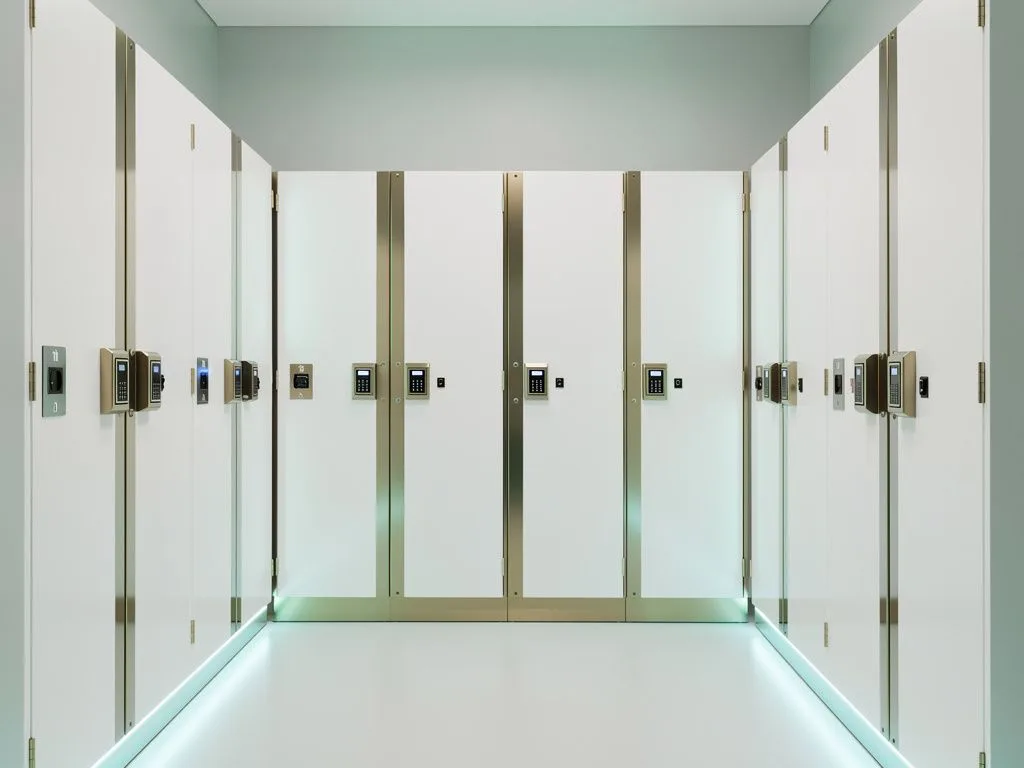
jintay-locks locker-lock-4

How to Choose Rust-Resistant Materials for Locker Locks in Humid Environments?

For locker locks in humid environments (swimming pools, hot springs, gym shower areas, public baths), rust-resistant material selection must be evaluated on three levels: the metal of the lock body itself, the corrosion resistance of fasteners and springs, and the sealing method of the electronic module (if any). 304 stainless steel is the basic threshold for most commercial applications; 316 stainless steel is suitable for high-salinity environments or areas with prolonged exposure to chlorine-based cleaners. Buyers should first assess the humidity, salinity, and cleaning frequency of the intended environment, then request material certificates and salt spray test reports from the manufacturer, rather than ordering based on a shiny appearance alone.
Key Takeaways

  • Internal mechanism is the main cause of lock failure in humid environments

    A rust-free lock housing does not mean the internal springs, pins, and circuit board are not corroded. The latch failing to spring back and unresponsive buttons are the real indicators of lifespan. Request a list of internal component materials.

  • Choose 304 or 316 based on environmental salinity and cleaning agents

    304 contains 18% chromium and 8% nickel, suitable for indoor gyms. 316 adds 2–3% molybdenum, resisting chloride pitting, and is suitable for pools, hot springs, coastal areas, or environments with chlorine-based cleaners.

  • Electronic locks must have confirmed sealing and IP ratings

    The circuit board needs epoxy encapsulation or potting. IP54 is suitable for splashing water, while IP65 and above withstand direct water spray. Include the battery compartment gasket aging cycle in the maintenance plan.

  • Salt spray test hours should correspond to the actual environment

    ASTM B117 48 hours is the basic level, 96 hours suits high salinity, and 240 hours or more is military-grade. The report should specify the pass criteria: no red rust on appearance or mechanism still functional.

Why Do Locks Fail So Easily in Humid Environments?

Lock failure in humid environments is not caused by "rust" alone, but by the combined action of three media: moisture, salt, and cleaning agents. Air in pool areas contains chloride vapor, hot spring areas contain sulfides, and public baths are cleaned frequently, with bleach and acidic cleaners that damage standard coatings. When internal springs, pins, and circuit boards come into contact with these media, problems such as latches not springing back, unresponsive keypads, and Bluetooth disconnections can occur. When evaluating, buyers must distinguish between "the lock housing is not rusted" and "the mechanism still works"—the former is only superficial, while the latter is the key to service life. In real cases, many locker locks in pool changing rooms still have shiny exteriors, but their internal springs have already broken due to chloride corrosion, forcing users to repeatedly apply force to open the doors. Such failures often occur in clusters after the warranty period. It is recommended to request a material list for internal components from the manufacturer rather than relying only on exterior photos, and to specify the grades of internal parts in the procurement specification to avoid acceptance checks that only look at the surface.

What Is the Difference Between 304 and 316 Stainless Steel?

304 stainless steel contains 18% chromium and 8% nickel, making it the mainstream material for food-grade and commercial hardware. It offers sufficient resistance to general humidity and cleaning agents at a relatively affordable price. 316 stainless steel adds 2–3% molybdenum, significantly improving resistance to chloride ion corrosion, making it suitable for coastal areas, pools, hot springs, or environments with prolonged use of chlorine-based cleaners. The cost difference between the two is usually reflected in material costs and machining difficulty; turning and welding 316 requires slower cutting parameters. If a buyer has budget constraints and the environment is an indoor gym rather than a pool, 304 can meet most needs. However, if the lock body will be splashed or immersed in salt water, 316 is the reasonable choice. When purchasing, buyers should require the manufacturer to indicate the actual grade on the material certificate rather than just writing "stainless steel." Additionally, note that the advantage of 316 lies in resistance to chloride ion pitting; for pure fresh water or neutral cleaning environments, the difference between 304 and 316 is not significant. Buyers do not need to upgrade everything just to "look more premium"—the decision should be based on actual water quality and cleaning procedures.

locker lock scene 1

What Should You Watch Out for with Electronic Locks in Humid Environments?

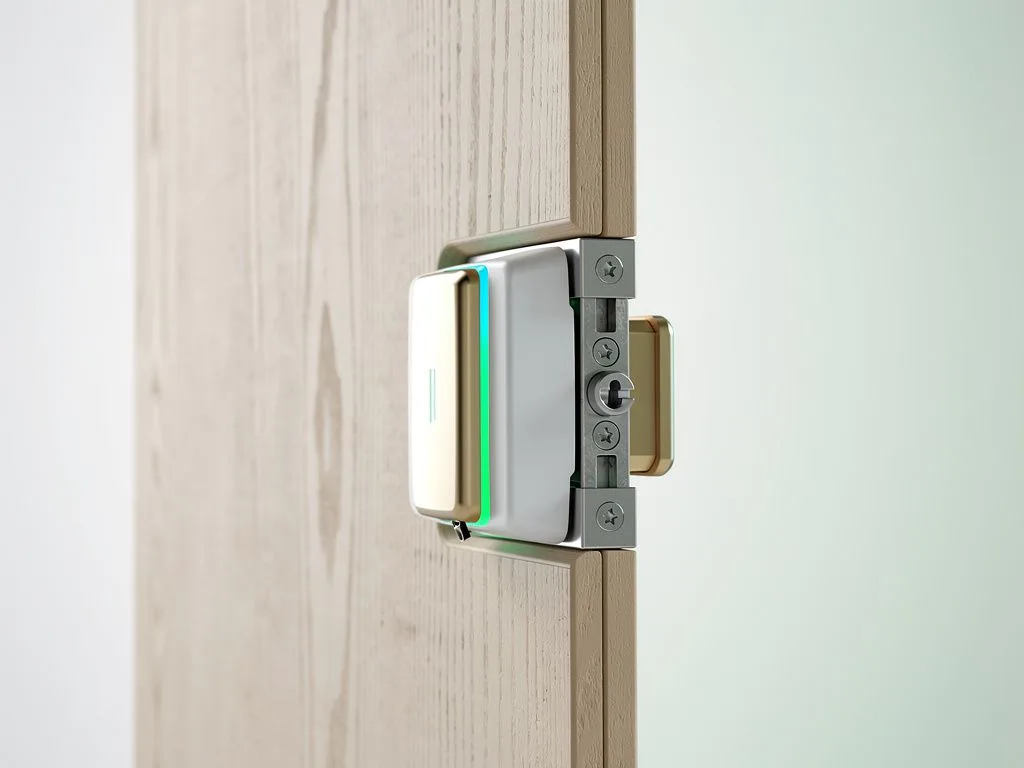
Electronic locks (Bluetooth, NFC, RFID) fail differently in humid environments than mechanical locks: moisture seeping into the circuit board can cause short circuits, oxidation of the reader head can shorten sensing distance, and battery compartment corrosion can lead to leakage. When selecting, look at three indicators: whether the circuit board is encapsulated with epoxy resin (conformal coating) or potting, the IP protection rating of the reader head and keypad, and the sealing design of the battery compartment. IP54 is suitable for general splash environments, while IP65 and above can withstand direct water spray. If buyers plan to deploy in shower areas or outdoor pools, they should require the manufacturer to provide a full-unit IP test report rather than just labeling it "waterproof." Additionally, if the battery compartment is designed for user replacement, the aging cycle of the sealing gasket should be included in the maintenance plan. A common maintenance blind spot is gasket deformation after repeated opening and closing, allowing moisture to seep in from the edge of the battery cover. This type of problem does not appear during low-humidity, dry factory testing and only emerges after continuous use in the actual environment. Therefore, long-term testing during the sample phase is more trustworthy than a one-time IP report.
Is a Higher Salt Spray Test Duration Always Better?

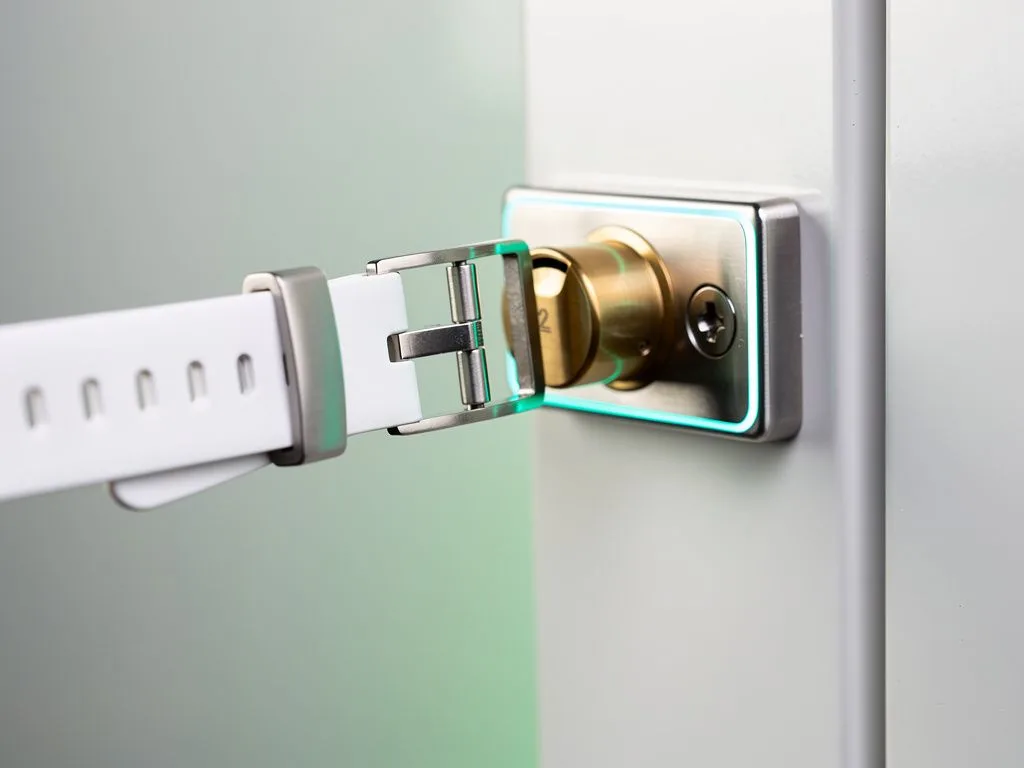
A higher salt spray test duration is not always better; it should correspond to the actual service environment. ASTM B117 48 hours is the basic reference for commercial hardware, 96 hours suits high-salinity or coastal settings, and 240 hours or more is typically used for military or marine equipment. If a buyer applies a 240-hour specification to an indoor gym, they will incur unnecessary material costs; conversely, if only 48 hours is required for a pool area, pitting corrosion may appear within six months. The principle is: the higher the chloride or salt concentration in the environment, the higher the cleaning frequency, and the more acidic the cleaning agents, the longer the test duration should be. Another common misconception is treating the salt spray test as a 'lifespan guarantee.' In reality, the salt spray test is only an accelerated corrosion test and cannot simulate the combined effects of mechanical wear, chemical attack from cleaning agents, and temperature-humidity cycling. Buyers should treat the salt spray report as a material screening threshold, not as the final acceptance criterion, and should require manufacturers to indicate in the report whether the post-test evaluation standard is 'no red rust on appearance' or 'mechanism still functional,' as the practical implications of these two are vastly different.

Material Selection Process for Locker Locks in Humid Environments

  1. 1

    Assess usage scenario conditions

    Confirm the environment type (pool/hot spring/coastal/general bathroom), humidity, salinity, cleaning frequency, and cleaning agent types.

  2. 2

    Request material and test documentation

    Ask the manufacturer for material certificates (indicating 304 or 316 grade) and salt spray test reports, and confirm the material of internal fasteners and springs.

  3. 3

    Confirm electronic module sealing specifications

    Check the circuit board encapsulation method, the entire unit's IP rating, and the battery compartment's sealing design, and request the full unit's IP test report.

  4. 4

    Conduct long-term testing in the actual field

    Before mass production, request samples to run continuously in the actual environment for at least 30 days, observing gasket aging and mechanism operation.

  5. 5

    Include humidity specifications in the purchase order

    Clearly state the environment type, cleaning frequency, and cleaning agent types in the RFQ stage, and require updated documentation at DFM, prototyping, and testing milestones.

Six-Point Checklist for Material Selection in Humid Environments

  • Lock Body Material Grade

    Require the manufacturer to specify 304 or 316 on the material certificate, avoiding vague terms like 'stainless steel.'

  • Fastener and Spring Material

    If internal pins and springs are made of ordinary carbon steel, even a 316 housing will have its overall lifespan compromised by the internal components.

  • Salt Spray Test Duration

    ASTM B117 salt spray testing of 48 hours is the basic reference; 96 hours or more is more suitable for high-salinity environments.

  • Electronic Module Sealing Method

    Confirm that the circuit board has conformal coating or potting, and specify the complete unit's IP rating.

  • Battery Compartment Sealing Design

    Replaceable battery designs require rubber gaskets; ask about the gasket material and recommended replacement interval.

  • Surface Finish Method

    Mirror polishing tends to show water spots more easily; matte or electropolished finishes are more suitable for high-frequency cleaning scenarios.

locker lock scene 2

How to Specify Humidity Requirements in Purchase Orders for OEM Customization?

The most problematic aspect of OEM custom projects is when 'humidity specifications' are only discussed in email correspondence and not included in the formal purchase order and drawings. Buyers should clearly state the usage scenario during the RFQ stage: environment type (pool / hot spring / coastal / general bathroom), cleaning frequency (daily / weekly), and cleaning agent type (chlorine-based / acidic / neutral). With this information, manufacturers can recommend appropriate materials, surface treatments, and sealing designs during the DFM stage. Before mass production, samples should be requested for actual field testing, running continuously for at least 30 days before deciding to place an order. Jintai Industrial's OEM process covers DFM evaluation, prototyping and validation, testing and certification, through to mass production. Buyers can request updated material and testing documentation at each stage to avoid discovering specification mismatches only at final acceptance. In practice, many buyers overlook the 'cleaning agent type' field, simply writing 'humid environment' and leaving it to the manufacturer to decide. As a result, the manufacturer assumes neutral cleaning, but the actual site uses bleach, leading to coating peeling discovered only during acceptance. Including the cleaning process in the RFQ is the most effective way to reduce the number of revision cycles.

How to Verify That a Manufacturer Has Actually Conducted Salt Spray Testing?

Salt spray testing is a basic verification for material selection in humid environments, but many suppliers in the market only state 'passed salt spray test' without providing a report. Buyers can assess from three aspects: whether the report specifies the test standard (ASTM B117 or ISO 9227), the test duration (48 / 96 / 240 hours), and the post-test evaluation criteria (no red rust on appearance vs. mechanism still functional). A complete report should include before and after test photos, sample quantity, and test solution concentration. For deployment in pools or coastal areas, buyers are advised to require test results of 96 hours or more; for an indoor gym shower area, 48 hours is usually sufficient. Note that the salt spray test is an accelerated test; actual service life must still be based on field testing. Another way to assess is to observe whether the manufacturer is willing to retest 'samples from the same batch.' If a supplier only provides a historical report and cannot reproduce the test conditions, the credibility of that report should be questioned. Buyers can also ask the manufacturer to indicate the testing laboratory name and date on the report, and independently verify whether that laboratory is still operational.

How Should Surface Finishes and Cleaning Maintenance Be Matched?

Surface finish is not just about appearance; it is a practical choice that affects cleaning frequency and water spot residue. Mirror polishing looks premium in low-maintenance office environments, but in public restrooms that are cleaned daily, it quickly becomes covered in water spots and fingerprints, making users mistakenly think the lock body is dirty. A brushed or electropolished finish reduces water spot adhesion and is visually more tolerant of long-term wear. Electropolishing also further enhances the corrosion resistance of stainless steel surfaces because it removes microscopic iron contaminants, allowing a more uniform passive film. When specifying, buyers should consider cleaning frequency and surface finish together: for high-frequency cleaning scenarios, choose a brushed or electropolished finish; mirror polishing should only be considered for low-maintenance environments. Additionally, the joint between the lock body and the door panel tends to trap water. If the design lacks a drainage slope, moisture can accumulate over time and seep into the internal mechanism through the joint. This type of structural issue cannot be solved by upgrading materials alone; it must be discussed with the manufacturer during the DFM stage.

FAQ

Why do locker locks in humid environments fail easily?

It's not just rust; moisture, salt, and cleaning agents act together. Pools have chloride vapor, hot springs have sulfides, and public bathrooms often use bleach and acidic cleaners. These damage the coating and corrode internal springs, pins, and circuit boards, causing the latch to fail, buttons to malfunction, or Bluetooth to disconnect.

How should I choose between 304 and 316 stainless steel?

304 contains 18% chromium and 8% nickel, offering sufficient resistance to general humidity and cleaners at a more affordable price. 316 adds 2–3% molybdenum, significantly improving resistance to chloride corrosion, making it suitable for pools, hot springs, coastal areas, or long-term use with chlorine-based cleaners. 304 is sufficient for indoor gyms; 316 is only needed where saltwater splashing or immersion occurs.

What specifications should I check for electronic locks in humid environments?

Check three indicators: whether the circuit board is encapsulated with epoxy or potting, the IP rating of the reader and keypad, and the battery compartment's sealing design. IP54 is suitable for general splashing, while IP65 and above withstand direct water spray. If the battery compartment has replaceable batteries, include the gasket aging cycle in the maintenance plan.

Is a higher salt spray test hour always better?

Not necessarily; it should match the actual environment. ASTM B117 48 hours is a basic commercial reference, 96 hours suits high salinity or coastal areas, and 240 hours or more is typically for military or marine equipment. Using a 240-hour spec for an indoor gym adds material costs, while a pool area with only a 48-hour spec may show pitting within six months.

How can I verify that a manufacturer actually performed salt spray testing?

Check if the report specifies the test standard (ASTM B117 or ISO 9227), test duration (48/96/240 hours), and post-test pass criteria (no red rust on appearance or mechanism still functional), along with before/after photos, sample quantity, and solution concentration. If the supplier only provides historical reports and cannot reproduce the test conditions, credibility should be questioned.

Need a Quote for Locker Locks for Humid Environments?

Please provide the application scenario (pool / hot spring / seaside / general restroom), estimated quantity, and cleaning frequency. We will confirm the material and testing requirements based on the actual specifications and reply.