jintay-locks tsa-sourcing

What to Look for When Sourcing TSA-Approved Travel Locks

When sourcing TSA-approved travel locks, the first thing buyers must confirm is whether the lock body bears the Travel Sentry certification mark and whether the master key system version is compatible with the security screening equipment at destination airports. Next, the lock type—combination, keyed, or integrated luggage lock—should be chosen based on the intended use case. Finally, buyers should evaluate the supplier's ability to manage the transition across OEM design review, mold development, prototyping and validation, and mass production. Missing any of these three layers can lead to certification failures or quality gaps discovered only after shipment.
Key Takeaways

  • Verify Certification Mark and Master Key Version

    Confirm the Travel Sentry mark is stamped on the lock body and verify that the master key system version is compatible with destination airport equipment to avoid locks being cut open during security checks.

  • Choose Lock Type Based on Usage Scenario

    Select combination locks, key locks, or integrated luggage locks based on check-in frequency, user habits, and maintenance convenience, and evaluate customer complaint and return/exchange costs.

  • Integrated Locks and External Locks Follow Different Routes

    Integrated locks require synchronized development with the luggage shell and mold binding; external locks can be sold independently with lower inventory pressure. The minimum order quantities and packaging methods differ between the two.

  • Failure Modes Require Test Coverage

    Require suppliers to provide tensile, shear, cycle life, drop, vibration, salt spray, and temperature cycling tests, and agree on a maximum defect rate in the contract.

How Should the TSA Certification Mark and Master Key System Version Be Verified?

The first question buyers most often ask is: how can you really confirm a lock is TSA-approved? The way to tell is not by reading text claims on the packaging, but by checking whether the lock body itself is stamped or engraved with Travel Sentry's red diamond mark, and which master key system version that mark corresponds to. The TSA master key system has been updated multiple times, and different versions use different key tooth profiles. If a lock uses an older specification while airports have upgraded to a newer version, security officers will not be able to open it with the universal key, and the lock may be cut off. During the inquiry stage, buyers should ask suppliers to provide physical photos of the mark's location, samples of stamping depth, and the corresponding system version number, and cross-check these against the official version list published by Travel Sentry. For OEM orders, the master key system version is a design freeze item. Once confirmed, it should not be changed midway, otherwise the earlier mold work and prototyping would need to be redone. This must be explicitly written into the purchase contract.

How Should You Choose Between Combination Locks, Keyed Locks, and Integrated Lock Cores?

The second question buyers often ask is: what are the appropriate use cases for each of these three lock types? Combination locks suit short business trips and travelers whose luggage passes through many hands. Their advantage is that there is no key to keep track of, and a forgotten password can be reset. The downside is that the dial or button mechanism may jam under the vibration of long-term checked baggage handling. Keyed locks have the simplest structure and the highest durability, making them suitable for long-haul checked luggage and heavy bags, but if the key is lost, the lock body must be broken to open it. Integrated luggage locks have the lock core pre-embedded into the zipper pull or latch position of the suitcase, giving a smooth appearance that is harder to pry open from the outside, but repair requires sending the entire lock, along with the suitcase body, back to the factory. For B2B buyers, the key to selection is not 'which is best' but 'which best matches the end user's unlocking habits and check-in frequency,' as this directly determines the complaint rate and the cost of returns and exchanges.

tsa sourcing scene 1

What Is the Difference Between Integrated Luggage Locks and External Padlocks?

The third question buyers often ask is: what are the practical differences between integrated locks and external padlocks in terms of sourcing and after-sales maintenance? Integrated locks are embedded into the suitcase structure at the factory, and the alignment between the lock core and the zipper pull or latch is determined by the suitcase mold. Therefore, the lock supplier must develop the product in sync with the suitcase factory, and during the DFM stage, the mounting hole position, thread depth, and waterproof gasket dimensions for the lock core must be confirmed. External padlocks are standalone products that the user passes through the zipper holes after purchase, so the lock body's dimensions, cable length, and latching method determine compatibility. For brand owners, integrated locks strengthen product recognition and anti-counterfeiting, but inventory must be tied to the suitcase body and cannot be replaced independently. External padlocks can be sold separately as accessories, putting less pressure on inventory. The minimum order quantity, mold cost sharing, and packaging methods differ between the two approaches, so buyers should decide based on their sales channel characteristics.
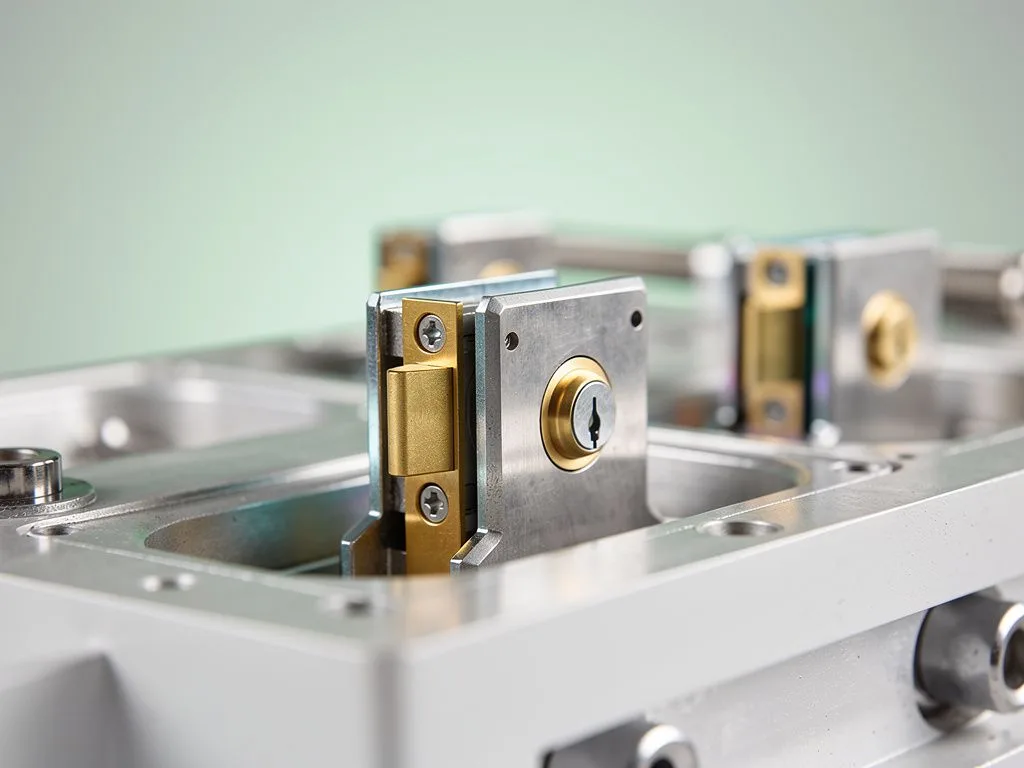
The fourth question buyers often ask is: what are the main failure modes of TSA travel locks, and how should they be prevented? The failure modes can be divided into three categories. The first is mechanical failure, including broken shackles, cracked lock bodies, stuck dials, and broken keys. The second is surface failure, including plating peeling, printing wear, rubber seal hardening, which can blur the TSA logo and compromise certification recognition. The third is functional failure, including forgotten passwords, keys breaking inside the lock cylinder, and misalignment between the integrated lock and the suitcase zipper. In terms of countermeasures, buyers should require suppliers to provide sample reports for drop tests, vibration tests, salt spray tests, and zipper alignment tests, and agree on an upper limit for defect rates and a return/exchange process in the contract. For OEM orders, failure mode prevention must be written into the design specification rather than waiting until after mass production to run tests.

Procurement Process

  1. 1

    Confirm Certification and Version

    Verify the Travel Sentry mark and master key system version on the lock body, and request physical photos and version numbers from the supplier.

  2. 2

    Select Lock Type and Route

    Choose combination locks, key locks, or integrated locks based on usage scenarios, and decide between the integrated or external lock route.

  3. 3

    Review Testing and Failure Countermeasures

    Require suppliers to provide tensile, shear, cycle life, drop, vibration, salt spray, and temperature cycling test reports.

  4. 4

    Confirm Customization Scope

    Evaluate customization feasibility and mold costs based on the three levels: appearance layer, structural layer, and system layer.

  5. 5

    Submit RFQ

    Compile target market, lock type preferences, annual usage, customization level, packaging method, and delivery schedule, and request a DFM evaluation timeline.

tsa sourcing scene 2

Which durability test items should be reviewed for travel locks?

The fifth question buyers often ask is: what items should a qualified travel lock test report include? The core items include shackle tensile strength, lock body shear strength, dial cycle life, key insertion/withdrawal cycle life, TSA master key opening smoothness, drop test, vibration test, salt spray test, and high/low temperature cycling test. Each item corresponds to a real failure scenario: tensile and shear strength determine whether the lock body can withstand forced attack, cycle life determines long-term reliability, drop and vibration simulate checked baggage handling, and salt spray and temperature cycling simulate shipping and warehousing conditions in different climates. Buyers should pay special attention to the sample size and pass/fail criteria. For example, cycle life tests typically require at least 10,000 cycles, but the exact number varies by lock type and usage scenario, so it should be confirmed with the supplier during the RFQ stage. For buyers seeking long-term brand partnerships, the completeness of test items matters more than the data in a single report, because it reflects whether the supplier's quality management system is mature.

How far can brand collaboration and custom appearance go?

The last question buyers often ask is: to what extent can OEM customization be done? In general, the customization scope can be divided into three levels. The first level is the appearance level, including color, plating, logo printing, and packaging design, which has a low technical barrier and the most flexible MOQ. The second level is the structural level, including shackle shape, dial font, key design, and seal material, which requires modifications to some molds and incurs additional tooling costs. The third level is the system level, including master key system version selection, number of password digits, and integrated lock cylinder specifications, which involves certification and compatibility and must be evaluated jointly by the supplier and the certification body. For brand owners, a reasonable customization strategy is to first build market recognition at the appearance level, then move to the structural and system levels once sales are stable, avoiding an excessive one-time investment that cannot be recovered. When evaluating suppliers, buyers should check whether they have a complete handoff process from DFM design review, mold development, prototyping and validation to mass production, as this is the key to determining whether the customization capability is truly executable.

Core checklist items buyers should master when sourcing TSA-certified travel locks

  • Certification mark and master key version

    Confirm that the lock body is embossed with the Travel Sentry mark and verify that the master key system version is compatible with the equipment at destination airports to avoid the lock being cut because security cannot open it.

  • Lock type and usage scenario matching

    Choose combination locks, key locks, or integrated suitcase locks based on travel frequency, user habits, and maintenance convenience, and evaluate customer complaint and return/exchange costs.

  • Route decision between integrated locks and external locks

    Integrated locks require synchronized development with the suitcase body and mold binding; external locks can be sold independently with lower inventory pressure. The MOQs and packaging methods differ between the two.

  • Failure mode prevention and test coverage

    Require suppliers to provide tensile, shear, cycle life, drop, vibration, salt spray, and temperature cycling tests, and agree on an upper limit for defect rates in the contract.

  • Three levels of OEM customization

    The appearance level (color, printing, packaging) has a low barrier; the structural level (shackle, dial) requires mold development; the system level (master key version, password digits) requires joint evaluation with a certification body.

  • Supplier process handoff capability

    Review the complete handoff from DFM design review, mold development, prototyping and validation, testing and certification to mass production, as this is the basis for judging whether the customization capability is truly executable.

Next Step in Your Sourcing Decision: How to Send an Effective RFQ to Suppliers

After completing the checks above, the next step for buyers is to organize their requirements into an actionable request for quotation (RFQ). The RFQ should include the target market (which determines the master key system version), lock type preference, estimated annual usage, level of customization (appearance, structure, or system), packaging method, and lead time. It should also ask the supplier to respond with the DFM evaluation timeline, mold cost sharing method, sample quantity, and testing items. Taking JINTAI as an example, the company is located in Taishan District, New Taipei City, Taiwan, and has dual capabilities in travel security hardware and IoT smart locks. Its travel security products cover TSA padlocks, combination locks, and key locks, supporting OEM customization and brand partnerships. The process covers DFM design evaluation, mold development, sample verification, testing and certification, and mass production. Buyers can use the checklist on this page to confirm details with the supplier item by item, ensuring that the final shipped lock body meets the certification, structural, and durability requirements of the end market.

FAQ

How can I confirm that a lock is truly TSA-certified?

The way to determine this is not by looking at text claims on the packaging, but by checking whether the lock body itself has the red diamond Travel Sentry logo stamped or engraved on it, as well as the master key system version corresponding to that logo. Buyers should request physical photos of the logo location, stamping depth samples, and the corresponding system version number from the supplier, and compare them against the official version list published by Travel Sentry.

How should I choose between combination locks, key locks, and integrated lock cores?

Combination locks are suitable for short business trips and travelers whose luggage passes through many hands. Their advantage is that there is no key to keep track of, and forgotten combinations can be reset. However, the dial or button mechanism may jam under prolonged vibration during check-in. Key locks have the simplest structure and the highest durability, making them suitable for long-haul check-in and heavy luggage. Integrated luggage locks have a smooth appearance and are less likely to be pried open by external force, but when maintenance is needed, the entire lock must be returned to the factory together with the luggage shell.

What are the practical differences in procurement between integrated locks and external locks?

Integrated locks are embedded into the luggage shell structure at the factory, and the alignment of the lock core with the zipper head or latch is determined by the shell mold. Therefore, the lock supplier must develop in sync with the luggage factory. External locks are independent products that users thread through the zipper holes themselves after purchase. Integrated locks enhance product recognition and anti-counterfeiting effects, but inventory must be tied to the luggage shell. External locks can be sold independently as accessories, resulting in lower inventory pressure.

How do travel locks actually fail in real-world use?

Common failure modes can be divided into three categories: mechanical failures include dial jamming, spring fatigue, and shackle breakage; surface failures include peeling of the electroplated layer, wear of printed logos, and hardening of rubber sealing rings; functional failures include forgotten combinations, keys breaking inside the lock core, and misalignment between the integrated lock and the luggage zipper. Buyers should request sample reports from suppliers covering drop tests, vibration tests, salt spray tests, and zipper alignment tests.

What items should a qualified travel lock test report include?

Core items include shackle tensile strength, lock body shear strength, combination dial cycle life, key insertion/removal cycle life, TSA master key opening smoothness, drop tests, vibration tests, salt spray tests, and high/low temperature cycling tests. Each item corresponds to a real-world failure scenario. Buyers should pay special attention to the number of test samples and the pass/fail criteria, and confirm these with the supplier during the RFQ stage.

Ready to Submit Your Sourcing Requirements for TSA-Certified Travel Locks?

Please organize your lock type, customization level, and annual usage requirements according to the checklist on this page, and contact JINTAI directly to receive a DFM evaluation and a quotation for the sampling timeline.