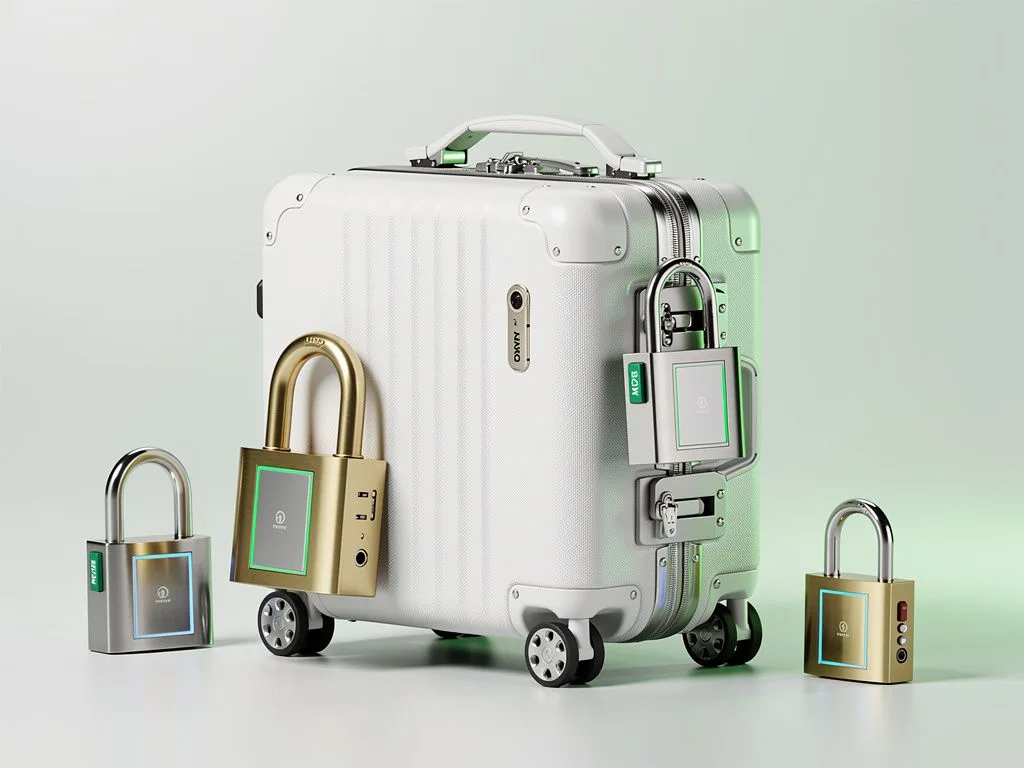
Differences Between Integrated Locks and External Padlocks for Luggage
An integrated lock is a fixed mechanism embedded into the luggage shell or zipper head, while an external padlock is a separate metal lock body that passes through the zipper pull holes. The two differ completely in terms of tamper resistance, repair methods, brand presentation, and the path to TSA certification. Sourcing decisions should be based on three variables—shell material, order volume, and brand positioning—rather than just the appearance of the lock. For B2B buyers, it is more efficient to first confirm which mounting interface the OEM/ODM supplier can support before discussing price and lead time, rather than directly comparing prices.
Key Takeaways
Structural Differences Between Integrated and External Locks
Integrated locks are embedded into the case shell or zipper head, while external locks pass through the zipper pull tab independently. The failure points, repair methods, and spare parts strategies are completely different.
Different TSA Certification Paths
Integrated lock certification includes case assembly, while external locks only cover the lock body. Changing the lock cylinder is significantly more costly for integrated locks than for external locks.
Tamper Resistance Depends on Case Material
Hard-shell cases with integrated locks are prone to zipper cutting, while soft-shell cases with external locks are prone to zipper teeth prying. Combined testing is required rather than relying solely on lock body data.
Brand Positioning Determines Lock Type Selection
Premium hard-shell cases prefer integrated locks to support price premiums, budget brands use external locks to reduce costs, and mid-range brands can adopt a hybrid strategy.
What Are the Structural Differences Between Integrated Locks and External Padlocks?
For an integrated lock (built-in lock), the lock cylinder and catch are embedded into the luggage shell or zipper head module at the factory. The zipper pull engages directly into the lock catch, and once locked, the zipper head cannot be pulled open on its own. An external padlock is a separate lock body that is used by passing it through the holes of two zipper pulls, secured by the shackle. This structural difference determines three things: first, the failure point for an integrated lock is on the shell surface, while for an external padlock it is on the shackle or the zipper hole; second, a damaged integrated lock typically requires returning to the factory to replace the module, whereas an external padlock can be replaced independently; third, an integrated lock appears as a seamless part of the shell, while an external padlock hangs outside. For buyers, this means the after-sales repair process and spare parts strategy are completely different. Spare parts for integrated locks must be tied to the shell, while external padlocks can be treated as universal consumables.
Why Do the TSA Certification Paths Differ Between the Two Lock Types?
TSA (Transportation Security Administration) certification is a compliance review of the lock cylinder and key system. The certification applies to the lock body itself, not the entire suitcase. Because the integrated lock's cylinder is coupled with the shell structure, the certification test includes the assembled state of the cylinder and shell. An external padlock is tested as a standalone lock body, so the certification scope is relatively simpler. For buyers, this raises two practical issues: first, when requesting TSA certification from a supplier, you must confirm whether the certificate covers the entire assembly including the shell or just the lock body alone—the two cannot be used interchangeably; second, any certification change for an integrated lock (for example, switching to a different lock cylinder manufacturer) will affect the entire shell mold, making the change cost far higher than for an external padlock. If the sourcing side plans to change lock cylinder suppliers in the future, the external padlock architecture offers significantly more flexibility.

Which Lock Type Is More Tamper-Resistant?
Tamper resistance cannot be judged by lock specifications alone; it depends on which weak point an attacker would target. The weak point of an integrated lock is the plastic thickness around the shell opening and the lock cylinder. The weak point of an external padlock is the shackle diameter and the metal ring of the zipper pull. In practice, when a hard-shell suitcase (PC, ABS) is paired with an integrated lock, attackers tend to cut the zipper rather than attack the lock body. When a soft-shell suitcase (fabric, nylon) is paired with an external padlock, attackers tend to pry open the zipper teeth rather than cut the shackle. In other words, the tamper resistance of the lock is highly dependent on the shell material and zipper grade. When sourcing, you should ask the supplier to provide joint testing scenarios for the lock and shell, rather than only looking at the single shear strength data of the lock cylinder. King Tech Industry covers a prototyping and verification stage in its OEM/ODM process, and buyers can request joint testing for their specific shell material at that stage.
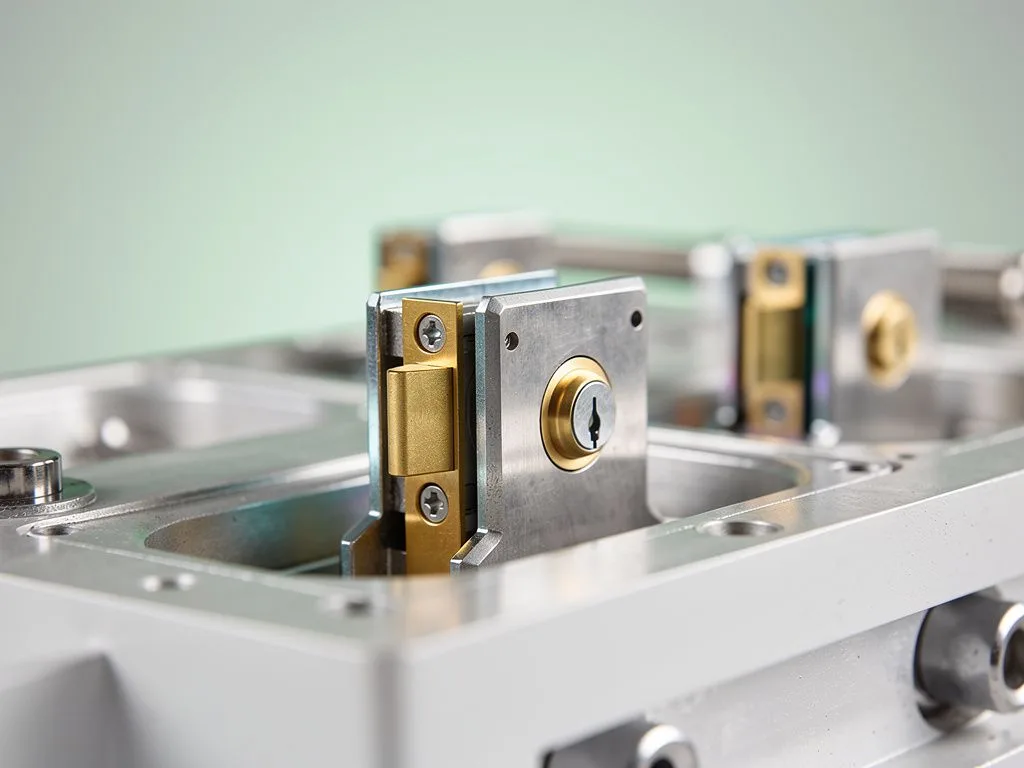
Six Interface Specifications to Confirm with Suppliers Before Purchasing
Mounting Interface Type
For integrated locks, confirm the shell opening dimensions and stud positions; for padlocks, confirm whether the shackle diameter and zipper pull tab hole diameter are compatible.
TSA Certification Coverage
Whether the certificate covers the lock body alone or the entire assembly including the case affects future change flexibility and customs declaration compliance.
Lock Cylinder Source
Changing the cylinder in an integrated lock affects the mold, while padlocks can be replaced individually. Confirm whether the supplier supports multiple cylinder sources.
Spare Parts and Maintenance Strategy
Spare parts for integrated locks are tied to the case model, while padlocks can serve as universal consumables, affecting inventory levels and after-sales processes.
Branding Presentation
Integrated locks can have logos molded into the lock cover, while padlocks typically use hang tags or printed logos on the lock body. Evaluate brand visual consistency.
OEM/ODM Minimum Order Quantity
Integrated locks involve mold development, so MOQs and development lead times are typically higher than for padlocks. Confirm during the RFQ stage.
What are the differences between integrated locks and padlocks in the OEM/ODM process?
The OEM/ODM process for integrated locks must incorporate the case structure from the DFM design evaluation stage, because the lock body opening, stud positions, and shell thickness directly affect mold design. After mold development, the prototyping and validation stage requires actual assembly onto the case to confirm interference and operating feel, making the entire cycle significantly longer than for padlocks. The OEM/ODM process for padlocks is relatively straightforward, with the main variables being shackle dimensions, lock body appearance, and branding. Mold changes typically only involve the lock body itself and do not affect the case. For buyers, this means two things: first, if purchasing an integrated lock solution, development timelines and mold costs must be budgeted into the project upfront; second, if the brand needs to test the market quickly, the iteration speed of padlock solutions is more favorable. Jintai Industrial's OEM/ODM process covers five stages: DFM evaluation, mold development, prototyping and validation, testing and certification, and mass production. Buyers can choose their entry point based on their own pace.
OEM/ODM Process Differences
- 1
DFM Design Review
Integrated locks require the case structure to be included in the review, as lock openings, screw boss positions, and shell thickness affect mold design.
- 2
Mold Development
Integrated lock mold development involves the case, making the cycle significantly longer than for external locks; external lock mold changes only involve the lock body itself.
- 3
Sampling and Validation
Integrated locks need actual assembly into the case to confirm interference and operating feel, while external locks mainly verify shackle dimensions and appearance.
- 4
Testing and Certification
Integrated lock TSA certification includes the case assembly state, while external locks are tested as standalone lock bodies, making the certification scope relatively simpler.
- 5
Mass Production
Integrated locks typically have higher minimum order quantities and longer development cycles than external locks, so MOQs should be confirmed during the RFQ stage.

How does brand positioning affect lock selection?
Brand positioning directly determines the suitability of integrated locks versus padlocks. High-end hard-shell luggage brands typically choose integrated locks because the seamless visual and tactile experience supports product premium pricing. Budget or fast-fashion brands prefer padlocks because they can source universal lock bodies separately to reduce costs and let consumers decide whether to purchase them. Mid-range brands often adopt a hybrid strategy: integrated locks for flagship models and padlocks for secondary lines or accessories. For B2B buyers, this decision cannot be based on cost alone; after-sales repair, brand consistency, and channel complaint handling must also be considered. If an integrated lock is damaged, consumers cannot replace it themselves and must return to the original manufacturer or channel. A damaged padlock can be replaced individually at retail. The after-sales cost structures are completely different, so buyers should confirm warranty policies and spare parts supply cycles for both architectures with the supplier during procurement.
Three practical details most often overlooked during procurement
The first detail is zipper specification compatibility: the shackle hole diameter of a padlock must correspond to the metal ring of the zipper pull tab. Differences in pull tab hole diameters between zipper manufacturers such as YKK and SBS can reach 0.5mm, so request physical samples for testing before purchasing. The second detail is the authorization scope of the TSA key system: TSA keys are manufactured under authorization from the U.S. government, and the authorization is granted to the cylinder manufacturer, not the case brand. OEM buyers must confirm that the cylinder used by the supplier is still within the authorization validity period. The third detail is transportation and storage conditions: if an integrated lock is compressed during shipping, the cylinder mechanism may deform and fail to unlock, whereas padlocks do not have this concern. For bulk buyers, the design of outer packaging and stacking methods should be validated during the prototyping stage rather than discovering problems after mass production.
FAQ
Where are the failure points for integrated and external locks respectively?
For integrated locks, the failure points are at the case shell opening and the plastic thickness around the lock cylinder. For external locks, the failure points are the shackle diameter and the metal ring of the zipper pull tab. When hard-shell cases are paired with integrated locks, attackers tend to cut the zipper; when soft-shell cases are paired with external locks, they tend to pry the zipper teeth.
What should be noted when requesting TSA certification from suppliers?
It is essential to confirm whether the certificate covers the entire assembly including the case or the lock body alone, as the two cannot be interchanged. Changes to integrated lock certification affect the case mold, making change costs much higher than for external locks. If you plan to switch lock cylinder suppliers, the external lock architecture offers greater flexibility.
How are integrated locks repaired after damage?
Integrated lock damage typically requires returning to the factory for module replacement, with spare parts tied to the case model and not user-replaceable. External locks can be replaced individually and are available as universal consumables at retail outlets. The after-sales cost structures are completely different.
What should be noted about the shackle hole diameter of external locks?
The shackle hole diameter of external locks must match the metal ring of the zipper pull tab, and differences in pull tab hole diameters among zipper manufacturers can reach 0.5mm. Physical samples should be requested for testing before purchasing to confirm compatibility.
What problems might integrated locks encounter during transportation?
If integrated locks are compressed during transportation, the lock cylinder mechanism may deform and fail to open, whereas external locks do not have this concern. For bulk purchases, outer packaging and stacking design should be included in validation during the sampling stage.
Need an OEM/ODM evaluation for integrated locks or external padlocks?
Provide your shell material, estimated order volume, and brand positioning, and JIN TAY INDUSTRIAL can provide a feasibility assessment and quotation for integrated locks versus external padlocks during the DFM stage.