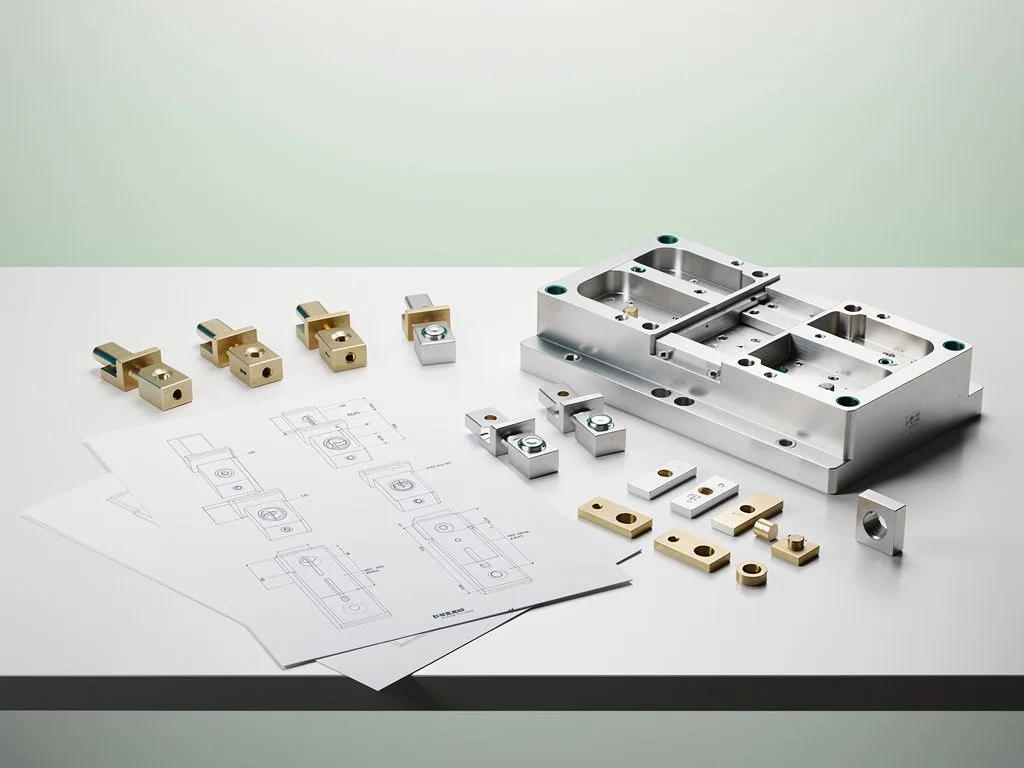
How Are Lock OEM Mold Costs Calculated?
Lock OEM mold costs are composed of four components: design, steel, CNC machining, and trial molding. A single-component mold typically ranges from tens of thousands to hundreds of thousands of US dollars, depending on the lock body structure, cavity count, and material. Buyers should evaluate the reasonableness of a quote using three metrics: unit cost amortization, order volume, and mold ownership terms. The contract should specify the amortization period and transfer conditions to avoid being charged again for subsequent orders.
Key Takeaways
Mold costs consist of four main components
Lock OEM mold costs cover DFM design review, mold core steel selection, CNC and EDM machining, and trial molding and mold repair, with the machining stage accounting for the highest proportion of total costs.
Three key variables drive mold cost differences
Cavity count, steel grade, and surface finish requirements are the three key variables affecting mold costs. For locks with the same structure, mold costs can vary by up to three times due to these factors.
Evaluate quotes using six key indicators
Buyers should assess quote reasonableness using six indicators: unit price amortization calculations, mold ownership terms, cavity count and capacity matching, steel specifications, trial molding frequency, and storage and transfer conditions.
Three payment structures require evaluation
Mold payment options include one-time purchase, amortization with orders, and hybrid structures. Buyers should choose based on product sales lifecycle, order stability, and the likelihood of switching suppliers.
What Do Lock OEM Mold Costs Typically Include?
Lock OEM mold costs cover four main areas: DFM design review, mold core steel selection, CNC and EDM machining, and trial molding and mold correction. During the DFM phase, the parting line and gate location are determined based on the lock body geometry, chamfers, and wall thickness, which directly affects the steel tonnage and cavity configuration. Mold cores commonly use tool steels such as SKD61 or DC53, with prices varying according to hardness and lifespan requirements. Machining accounts for the highest proportion of total costs, especially for precision features like lock cylinder holes, key tooth profiles, and combination dials, which often require slow-wire EDM cutting. Trial molding includes T0 sample dimensional inspection, the number of consecutive trial runs, and mold correction hours. These items should be itemized on the quote rather than lumped together as a "complete mold set." When receiving a quote, buyers should ask the supplier to provide a BOM-level breakdown of labor hours to determine which costs are one-time investments and which are ongoing maintenance costs that will continue after mass production.
Why Can Mold Costs for the Same Lock Vary by Up to Three Times?
The three major variables affecting lock mold costs are cavity count, steel grade, and surface finish requirements. In terms of cavity count, a single-cavity mold is suitable for small batches or high-mix, low-volume production, offering the lowest initial cost but the highest per-unit cost. Four-cavity or eight-cavity molds can lower unit costs but multiply the initial investment, making them suitable for buyers with stable annual demand above a certain scale. In terms of steel grade, mold cores for glass-fiber-reinforced or metal powder injection molding require higher-hardness powder steel, which costs more than twice as much as standard plastic mold steel. In terms of surface finish, brushed finishes, mirror finishes, or logo etching all increase EDM and manual polishing hours. If a buyer sources both TSA padlocks and IoT smart locks, the significant differences in lock body structure mean the molds cannot be shared and must be estimated separately. It is recommended to provide 3D drawings or samples during the inquiry stage so the supplier can assess whether existing mold bases can be reused; otherwise, actual costs are likely to be underestimated.
Six Key Metrics to Review When Evaluating Mold Quotes
Unit Cost Amortization Calculation
Ask the supplier to provide a unit cost amortization table dividing the mold cost by the estimated order volume to confirm the unit price remains competitive at the projected shipment volume.
Mold Ownership Terms
The contract should clearly state whether the mold is owned by the buyer or the supplier, as well as the disposal method after the order ends, to avoid obstacles in future supplier transfers.
Cavity Count and Capacity Match
Confirm that the mold cavity count matches the order volume range to avoid purchasing a high-cavity mold for small batches that cannot be amortized.
Steel and Heat Treatment Specifications
Require the mold core steel grade and hardness requirements to be specified, as these directly affect mold lifespan and subsequent maintenance costs.
Trial Molding Runs and Mold Correction Hours
The quote should distinguish between T0 trial molding and subsequent mold correction hours to avoid discovering dimensional deviations after mass production and incurring additional charges.
Mold Storage and Transfer Conditions
Confirm the mold storage location, custodial responsibility, and the procedures and cost allocation for transferring the mold to another supplier in the future.

Should mold fees be paid in full upfront or amortized over orders?
Mold fees are typically paid in one of three ways: a one-time buyout, amortization across orders, or a hybrid model. A one-time buyout suits buyers with clear order volumes and long product lifecycles; its advantages are the lowest subsequent unit price and clear mold ownership, while its disadvantages are high upfront cash flow pressure and the risk that the mold investment cannot be recovered if the product is discontinued early. Amortization across orders is the opposite: the supplier includes a mold fee portion in each shipment, so the buyer's initial burden is light, but the unit price is higher and mold ownership usually remains with the supplier. The hybrid model involves the buyer paying a partial down payment with the remainder amortized across orders, and is commonly used in the middle ground where both parties are building a long-term relationship. When choosing, buyers should evaluate three things: the expected product sales lifespan, whether order volumes are stable, and whether they may switch suppliers in the future. Regardless of the method, the contract should specify whether the unit price will be reduced once the mold fee is fully amortized, to avoid paying amortization fees long-term without enjoying ownership.
How can you tell if a mold fee quote is reasonable?
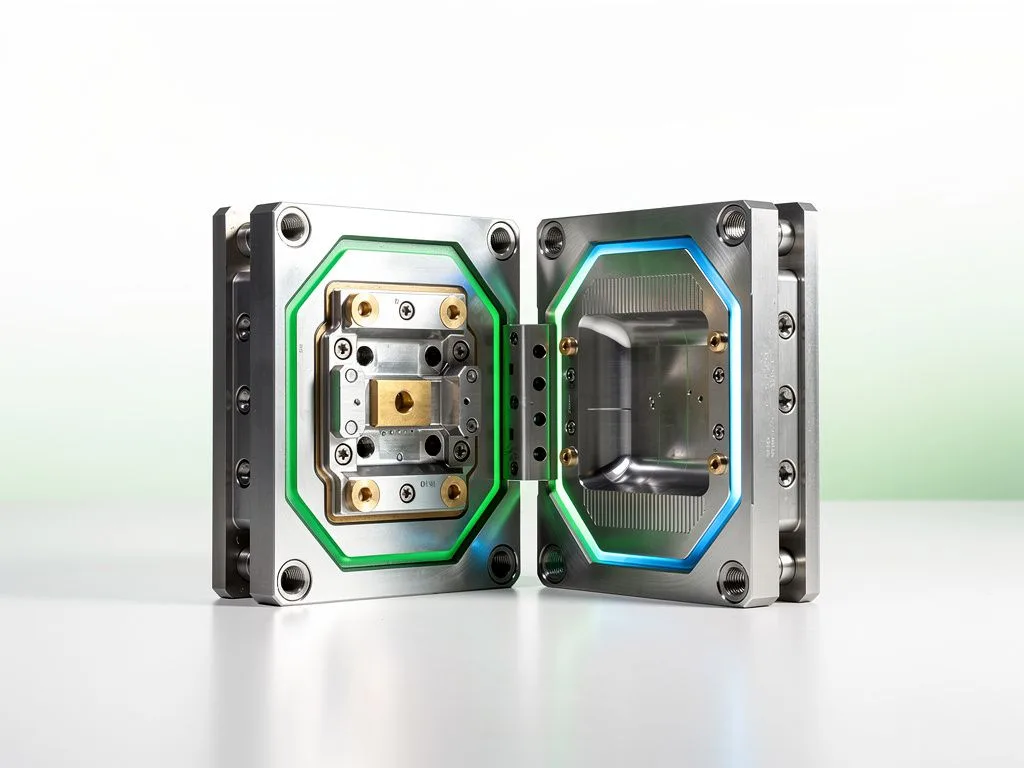
The most effective way to judge whether a mold fee quote is reasonable is to obtain itemized quotes from at least three suppliers for comparison. The market price for lock molds is relatively transparent; for a TSA padlock body of the same structure, the price range for a single-cavity mold typically falls within a specific range, and a difference of more than 30% warrants asking why. Common areas where quotes are inflated include: charging design fees separately without explaining what they cover, stating a low number of trial runs when more will actually be needed, and failing to specify the steel grade of the mold core. Buyers should also note the difference between a "complete mold set" and a "single-component mold." A TSA padlock may include multiple molds for the lock body, shackle, cylinder, and dial, so the total price can be several times that of a single component. It is recommended to provide a complete BOM and parts list when requesting quotes and ask suppliers to quote each part individually, so as to avoid underestimating the overall investment.

After mold fees are fully amortized, how much will the unit price drop?
After mold fees are fully amortized, the unit price reduction typically falls between 5% and 15%, depending on the proportion of mold fees in the original quote. If the mold fee amortization accounted for 20% of the unit price in the original quote, the theoretical reduction after amortization would be 20%, but in practice suppliers retain part of it to cover mold maintenance and storage costs, so the actual price reduction the buyer receives will be lower than the theoretical value. Another variable is whether order volumes reach the originally agreed amortization base volume; if actual shipments are lower than expected, the amortization period will be extended and the unit price reduction will shrink accordingly. In the contract, buyers should clearly define three things: the amortization base volume, the formula for adjusting the unit price after amortization ends, and how mold maintenance costs are calculated. For product lines that include high-value items such as IoT smart locks, mold fees account for a lower proportion of the unit price, so the benefit of amortization is relatively limited; buyers should focus on electronic component costs rather than mold fees.
In OEM cooperation, who bears the risk for molds?
Mold risks in OEM cooperation can be divided into three categories: design change risk, mass production quality risk, and supplier operational risk. For design change risk, if the buyer requests structural modifications after trial runs, the already-machined parts may be scrapped; this loss is usually borne by the buyer, but the contract should specify the maximum number of modifications and how costs are shared. For mass production quality risk, if the mold's lifespan falls short of expectations and it is scrapped early, responsibility is determined by the contract terms; a common practice is for the supplier to handle repairs while the buyer shares material costs. For supplier operational risk, if the OEM supplier goes bankrupt or switches orders, mold disposal becomes a major issue, so buyers should require in the contract that mold ownership belongs to the buyer and regularly send personnel or a third party to inspect the mold condition. For products such as IoT smart locks, molds also include test fixtures for electronic components, and these costs and maintenance responsibilities should also be included in the contract discussions.
FAQ
What items are typically included in lock OEM mold costs?
Lock OEM mold costs cover four main areas: DFM design review, mold core steel selection, CNC and EDM machining, and trial molding and mold repair. The DFM stage determines the parting line and gate location. Common steels include SKD61 or DC53 tool steel. The machining stage accounts for the highest proportion of total costs. Trial molding includes T0 sample dimensional inspection and mold repair labor. Quotes should list each item separately.
Why can mold costs for the same lock vary by up to three times?
The three key variables affecting lock mold costs are cavity count, steel grade, and surface finish requirements. Single-cavity molds have the lowest initial cost but the highest per-unit cost. Four-cavity or eight-cavity molds multiply the initial investment several times. Powder steel used for glass-fiber or metal-powder injection molding costs more than twice as much as standard plastic mold steel. Brushed finishes, mirror finishes, or logo etching increase EDM and polishing labor hours.
Should mold costs be paid in full upfront or amortized with orders?
Mold payment options include one-time purchase, amortization with orders, and hybrid structures. One-time purchase suits buyers with clear order volumes and long product lifecycles, offering the lowest subsequent unit price but higher upfront cash flow pressure. Amortization with orders reduces initial burden but results in higher unit prices. Hybrid structures involve a partial down payment with the remainder amortized across orders, commonly used in long-term partnerships.
How can I determine if a mold quote is reasonable?
The most effective approach is to obtain itemized quotes from at least three suppliers for comparison. The lock mold market is relatively transparent. If the price difference for a single-cavity TSA padlock body mold with the same structure exceeds 30%, it is worth asking why. Common quote padding includes design fees listed separately without explanation, very few trial molding rounds, and failure to specify the mold core steel grade.
How much will the unit price drop after mold costs are fully amortized?
After mold costs are fully amortized, the unit price typically drops by 5% to 15%, depending on the proportion of mold costs in the original quote. If mold amortization accounts for 20% of the unit price, a theoretical reduction of 20% is possible, but manufacturers retain some for mold maintenance and storage, so the actual reduction is lower. The reduction also depends on whether order volumes meet the agreed amortization base.
Get a Custom Mold Cost Estimate
Provide your lock body 3D drawing or sample, and we will provide itemized quotations based on structure, cavity count, and order volume, along with unit price amortization and ownership terms.