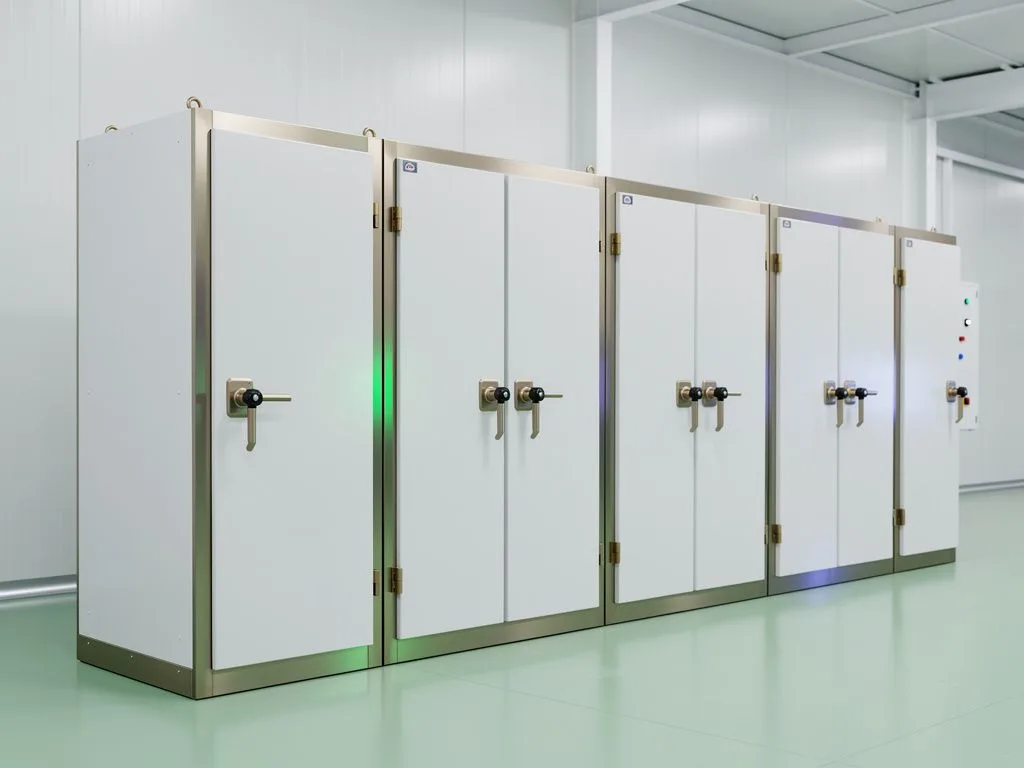
jintay-locks industrial-cabinet-4

How should temporary authorization and audit records be managed at construction sites?

The core of temporary authorization and audit records at construction sites is to ensure that every lock opening leaves traceable digital evidence: who opened which lock, at what time, and whether the authorization was still valid. For high-risk areas such as electrical distribution boxes and equipment cabinets, buyers should assess whether IoT smart locks support one-time passwords, Bluetooth or NFC authorization, time-window restrictions, and cloud log export capabilities. Mechanical locks cannot answer the question of "who opened the lock," so temporary authorization scenarios almost always require an upgrade to electronic record-keeping.
Key Takeaways

  • Temporary authorization requires digital records

    The core of temporary authorization at construction sites is to leave traceable digital evidence for every unlock. Mechanical locks cannot answer who opened them, so an upgrade to electronic records is necessary.

  • Evaluate offline capability and log export

    Buyers should focus on whether records can still be captured during network outages and whether logs can be exported in an auditable format, rather than just whether the system is electronic.

  • Choose authorization methods based on the target

    One-time passwords suit external contractors, Bluetooth or NFC credentials suit on-site technicians, and high-risk areas often use a dual-track approach.

  • Audit logs must reconstruct events

    Audit logs must record timestamps, user IDs, lock IDs, unlock types, and authorization status, and be retained for at least 90 days for review.

Why can't temporary authorization for electrical distribution boxes and equipment cabinets rely solely on mechanical keys?

Temporary authorization for electrical distribution boxes and equipment cabinets cannot rely solely on mechanical keys because keys cannot answer the questions of "who, when, and why" a lock was opened. A common scenario at construction sites involves electrical contractors, equipment vendors, and auditors entering the site in rotation. Once a key is copied or handed over, it becomes impossible to assign responsibility afterward. IoT smart locks use Bluetooth, NFC, or RFID to identify individuals, and every lock opening generates a timestamp and user ID that can be transmitted to the cloud in real time. For buyers, the key evaluation criteria are not "can it be digitized," but rather "can it still record when offline" and "can the records be exported into an auditable format." Jin Tay Industries' IoT platform integrates cloud connectivity and supports padlock and cabinet lock formats, making it suitable for industrial cabinet applications that require identity verification. However, specific offline fault tolerance and log retention periods should be confirmed based on actual specifications.

Should temporary authorization use one-time passwords or Bluetooth credentials?

Whether temporary authorization should use one-time passwords or Bluetooth credentials depends on whether the authorized party is a "person" or a "device." One-time passwords (OTP) are suitable for mobile identities such as external contractors and auditors. Administrators can set a validity period of 4–8 hours in the backend, and the password becomes invalid after use without requiring phone pairing. Bluetooth or NFC credentials are more suitable for on-site technicians, as authorization is tied to a specific phone or card and can be revoked immediately if lost. For high-risk areas such as electrical distribution boxes, a common practice among buyers is to run a "dual-track" approach: regular personnel use Bluetooth credentials, while temporary visitors use OTP. When evaluating, buyers should confirm whether the lock supports both modes simultaneously and whether old credentials are truly unable to open the lock after revocation, rather than merely being hidden from the front-end interface.

industrial cabinet scene 1

What level of detail should audit records capture to meet construction site requirements?

Audit records must be detailed enough to "reconstruct the sequence of events" to meet construction site requirements. The minimum fields should include timestamp, user ID, lock ID, unlock type (authorized / forced / abnormal), and the authorization status at the time. Many construction site regulations require records to be retained for more than 90 days and to be exportable as CSV or PDF within 24 hours for third-party review. For electrical distribution boxes and equipment cabinets, buyers should also pay attention to "forced unlock" events—whether the system leaves an anomaly marker when someone physically breaks the lock or bypasses electronic controls, rather than silently ignoring it. Jin Tay Industries' IoT platform emphasizes cloud connectivity and identity verification integration, but the specific log fields, retention period, and export format should be confirmed based on actual specifications. Buyers are advised to request sample reports during the inquiry process.
Six Evaluation Criteria for Temporary Authorization and Audit Logs

  • Authorization Type Flexibility

    Whether it supports multiple authorization methods such as one-time passwords, Bluetooth, NFC, and RFID, covering both permanent and temporary personnel.

  • Time Window Restrictions

    Whether administrators can set authorization start and end times, with automatic expiration to avoid the risk of manual revocation being forgotten.

  • Offline Logging Capability

    Whether the lock can still record unlock events when offline, and batch upload them to the cloud once connectivity is restored.

  • Log Export Formats

    Whether records can be exported as CSV, PDF, or via API integration formats for third-party audits and internal record-keeping.

  • Anomaly Event Flagging

    Whether anomalies such as forced unlocking, multiple password errors, or lock tampering leave distinct flags rather than appearing as regular logs.

  • Immediacy of Credential Revocation

    When a phone or card is lost, whether old credentials can be invalidated with one click on the admin side, and whether the revocation command is delivered to the lock in real time.

Do On-Site Environmental Conditions Affect Lock Selection?

On-site environmental conditions directly affect lock selection, especially for areas such as electrical distribution boxes and outdoor cabinets. Dust, humidity, temperature differences, and oil contamination can interfere with electronic components and mechanical structures. Buyers should confirm whether the lock has basic dust and water ingress protection (typically IP54 or higher as a reference point) and whether metal parts have anti-corrosion treatment. For sites near coastlines or in industrial zones, salt spray and sulfides accelerate lock degradation, so material selection requires special attention. Battery life is also a common pain point on construction sites, as low temperatures reduce battery capacity. Buyers should evaluate whether external power support or low-battery warnings are available. Kingtech Industrial's IoT smart locks integrate Bluetooth, NFC, RFID, and cloud connectivity, with applications covering industrial cabinets and electrical distribution boxes. However, specific protection ratings, material specifications, and battery life should be confirmed against actual specifications.

Implementation Process for Temporary Authorization and Audit Records

  1. 1

    Confirm on-site operational context

    Clarify whether authorized parties are employees or contractors, the authorization period, and tiered permission needs, and prepare site workflow documents.

  2. 2

    Evaluate authorization methods

    Choose one-time passwords, Bluetooth, or NFC credentials based on the target, and confirm whether the lock supports multiple modes simultaneously.

  3. 3

    Confirm audit record specifications

    Confirm log fields, retention period, export format, and anomaly event flags, and request sample reports.

  4. 4

    Confirm environmental conditions and specifications

    Confirm dust and water resistance ratings, corrosion treatment, battery life, and low-battery warnings.

  5. 5

    Prototype validation and real-device testing

    During the prototype stage, require real-device testing to confirm that old credentials truly become invalid after revocation and to verify offline recording capability.

industrial cabinet scene 2

What Should Buyers Prepare for OEM Customization of Temporary Authorization Features?

When customizing temporary authorization features under an OEM arrangement, buyers should prepare not a list of "desired features" but a concrete description of "how the site actually operates." Common points to clarify include: whether the authorized users are employees or contractors, whether the authorization period is a single day or several months, whether tiered permissions are needed (for example, separate management of cabinets and distribution boxes), and who will receive the audit records. Kingtech Industrial's OEM/ODM process covers DFM design review, mold development, prototyping validation, testing and certification, and mass production. Buyers can present their authorization workflow requirements during the DFM stage, and the engineering team will assess which aspects can be adjusted through firmware and which require hardware changes. It is recommended that buyers prepare one to two on-site workflow documents so the manufacturing side can understand the actual usage context and avoid mismatches between the final product and requirements. Specific certification items and test reports should be confirmed against actual specifications.

What Are Common Misconceptions About Temporary Authorization and Audit Logs?

There are three common misconceptions about temporary authorization and audit logs. First, treating "remote unlocking" as equivalent to "having audit functionality"—but without user identity binding, remote unlocking is actually a security vulnerability. Second, treating "cloud logs" as "permanently stored"—but many platforms only retain data for 30 days, so buyers need to confirm retention periods and export mechanisms. Third, treating "one-time passwords" as absolutely secure—but if the password is sent via SMS and the phone is compromised, there is still a leakage risk. For distribution box and cabinet applications, buyers should pay special attention to whether "revoked authorization truly becomes invalid"—some platforms only hide the button on the front end, while the old password still works. Kingtech Industrial's IoT platform emphasizes identity verification and cloud integration, but specific security mechanisms and revocation logic should be confirmed against actual specifications. It is recommended to request hands-on testing during the prototyping stage.

FAQ

Should temporary authorization use one-time passwords or Bluetooth credentials?

It depends on whether the authorized party is a person or a device. One-time passwords (OTP) suit mobile identities such as external contractors and auditors; administrators can set a validity period of 4–8 hours, and the password expires after use. Bluetooth or NFC credentials suit on-site technicians, as authorization is tied to a specific phone or card and can be revoked immediately if lost. High-risk areas often use a dual-track approach: regular staff use Bluetooth credentials, while temporary entrants use OTP.

What level of detail must audit records meet to comply with construction site requirements?

Audit records must be detailed enough to reconstruct the sequence of events. The minimum fields should include timestamps, user IDs, lock IDs, unlock types (authorized, forced, or abnormal), and the authorization status at the time. Many site regulations require records to be retained for at least 90 days and exported as CSV or PDF within 24 hours for third-party review. Forced unlock events must also be flagged as anomalies.

Do environmental conditions at construction sites affect lock selection?

Yes, they directly affect lock selection, especially for distribution boxes and outdoor cabinets. Dust, moisture, temperature fluctuations, and oil can interfere with electronic components and mechanical structures. Buyers should confirm that the lock has basic dust and water resistance (IP54 or higher is a common starting point) and corrosion-resistant treatment for metal parts. Coastal or industrial sites need to watch for accelerated degradation from salt spray and sulfides, and low temperatures can reduce battery capacity.

What are common misconceptions about temporary authorization and audit records?

There are three common misconceptions. First, treating remote unlocking as having audit capability, but without user identity binding, remote unlocking is actually a security vulnerability. Second, treating cloud logs as permanent storage, but many platforms only retain them for 30 days. Third, treating one-time passwords as absolutely secure, but if the password is sent via SMS and the phone is compromised, there is still a leakage risk. It is also important to verify whether authorization truly becomes invalid after revocation.

What should buyers prepare for OEM customization of temporary authorization features?

Buyers should prepare not a list of desired features, but a concrete description of how the site operates. Common items to clarify include: whether the authorized parties are employees or contractors, whether the authorization period is a single day or several months, whether tiered permissions are needed, and who will receive the audit records. It is recommended to prepare one or two site workflow documents so the manufacturer can understand the actual usage context and avoid mismatches between the final product and requirements.

Need temporary authorization and audit records for distribution boxes or cabinets?

Please provide the on-site scenario, authorized parties, and estimated quantity, and we will assess the feasibility of IoT smart locks and OEM customization.