jintay-locks industrial-cabinet-3

How should the reliability of cabinet and distribution box locks be assessed in high-temperature and vibration environments?

The reliability of locks in high-temperature and vibration environments must be evaluated from three aspects simultaneously: thermal stability of materials, mechanical resistance to vibration, and durability of electrical connections—not just a single specification. Buyers should first define the maximum working temperature, temperature cycling range, vibration frequency, and amplitude at the site, then ask suppliers to provide test plans and verification data under those conditions. At JINTAI INDUSTRIAL, environmental stress testing is included in the prototype verification stage of the OEM process, but the specific test conditions and acceptance criteria must be confirmed based on the actual specifications.
Key Takeaways

  • Reliability requires simultaneous evaluation of three aspects

    The reliability of locks in high-temperature and vibration environments must be evaluated simultaneously from three aspects: material thermal stability, mechanical structure vibration resistance, and electrical connection durability. It cannot be judged by a single specification alone.

  • Industrial locks cannot follow consumer product standards

    Cabinet and distribution box locks are exposed to high temperatures, temperature cycling, and continuous vibration for long periods. The plastic parts and springs of ordinary travel locks will accelerate aging. Buyers should confirm whether the supplier has made material and structural adjustments for industrial environments.

  • High temperatures affect four types of critical components

    The impact of high temperature on locks is concentrated in thermal deformation of plastic or metal housings, metallurgical changes in springs, loss or hardening of lubricating grease, and solder joints and battery performance of electronic components.

  • Vibration damage is a fatigue failure

    Vibration damage to locks is usually not a one-time failure but fatigue failure. Common modes include loosening of solder joints, loosening of screws, wear of latches, and poor contact of connectors.

Why can't cabinet and distribution box locks be judged by the reliability standards of ordinary travel locks?

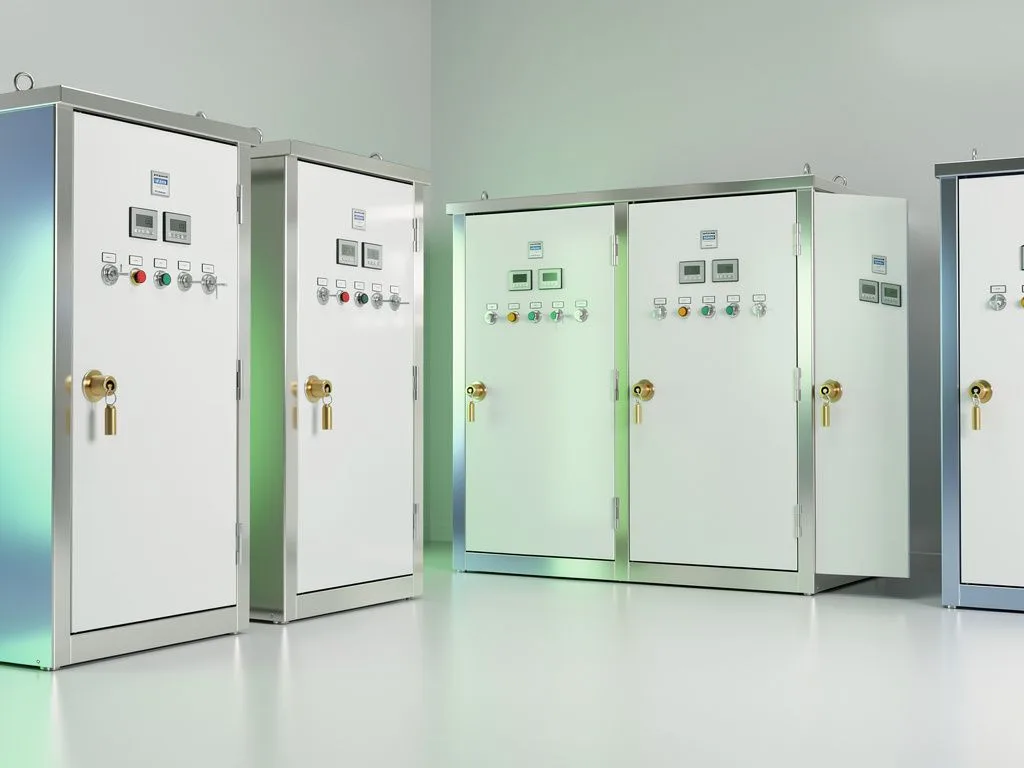
The working environment of cabinet and distribution box locks is completely different from travel scenarios—this is the most commonly overlooked premise by buyers. Travel locks face brief open-close cycles and room-temperature environments, but cabinet and distribution box locks are often installed in server rooms, substations, factory production lines, or outdoor enclosures, where they are exposed to prolonged temperatures above 40°C, temperature cycling caused by direct sunlight, and continuous vibration from fans, air conditioning, and nearby machinery. Under such conditions, the plastic parts and springs of ordinary travel locks will age faster, and changes in mechanism tolerances may lead to latch failure or difficulty in opening. When evaluating, buyers should first confirm whether the supplier's locks have undergone material and structural adjustments for industrial environments, rather than directly applying reliability data from consumer product lines. The specific temperature resistance range and vibration tolerance levels must be confirmed based on actual specifications.

Which key components of a lock are affected by high-temperature environments?

The impact of high temperature on locks is concentrated in four types of components: thermal deformation of the housing (plastic or metal), metallurgical changes in internal springs, loss or hardening of lubricating grease, and—for IoT smart locks—solder joints and battery performance of electronic components. Plastic housings may warp under sustained high temperatures, causing changes in button travel or loosening of housing latches; springs experience a decrease in elastic modulus at high temperatures, leading to insufficient return force over time; lubricating grease may thin and flow out at high temperatures, then harden at low temperatures, causing mechanism jamming. When requesting quotes, buyers should explicitly ask suppliers which high-temperature-resistant materials and lubricant specifications are used, and request material data sheets (MDS) or equivalent documentation. Specific material grades and temperature resistance levels must be confirmed based on actual specifications.

industrial cabinet scene 1

What are the failure modes of lock structures under vibration environments?

Vibration damage to locks is usually not a one-time failure but fatigue failure. Common modes include: solder or rivet joints loosening due to repeated stress, screw fasteners backing out due to vibration, latches in the mechanism losing positioning accuracy due to wear, and poor contact in connectors of electronic modules. For IoT smart locks, vibration can also cause internal antenna displacement, affecting Bluetooth or NFC read range and stability. When defining vibration test conditions, buyers should distinguish between random vibration and sinusoidal vibration, and specify frequency range, amplitude (or acceleration), and test duration. Common industrial vibration test reference standards include the IEC 60068 series, but the specific applicable clauses and test parameters must be confirmed based on actual specifications.
What reliability verification documents should buyers request from suppliers?

The completeness of reliability verification data is a direct basis for judging a supplier's engineering capability. Buyers should request at least four categories of data: first, an environmental stress testing plan that specifies temperature range, temperature change rate, humidity conditions, and vibration parameters; second, a failure analysis report after testing that explains which parts showed what kind of degradation; third, incoming inspection specifications for materials and components, including acceptance criteria for plastics, metals, springs, and electronic modules; fourth, a process control plan for mass production, such as SPC monitoring of critical dimensions and sampling frequency. If a supplier can only say "passed testing" without providing details, it usually means their reliability engineering is not yet up to standard. At Kingtech Industrial, testing and certification is an independent stage in the OEM process, but the specific test items and report format need to be confirmed based on actual specifications.

Reliability Verification Stages in the OEM Process

  1. 1

    DFM Design Review

    Review material selection and structural strength, embedding reliability thinking into the design stage.

  2. 2

    Mold Development Confirmation

    Confirm the dimensional stability of injection molding or stamping to ensure process capability.

  3. 3

    Prototype Verification Testing

    Execute the first round of environmental stress tests to identify design weaknesses and make improvements.

  4. 4

    Test Certification Completion

    Enter mass production only after completing full reliability verification to ensure products meet specifications.

industrial cabinet scene 2

At which stage should reliability verification be arranged in the OEM process?

If reliability verification is only done before mass production, the cost will be very high. The correct approach is to embed reliability thinking into every node of the OEM process: the DFM design evaluation stage should review material selection and structural strength; the mold development stage should confirm dimensional stability of injection molding or stamping; the prototyping verification stage should conduct the first round of environmental stress testing to identify design weaknesses; the testing and certification stage should complete full reliability verification before entering mass production. This stage-by-stage approach allows problems to be caught at low-cost stages rather than discovering the need for mold changes after mass production. When reviewing suppliers, buyers can ask them to explain the reliability activities and exit criteria at each stage, which better reflects long-term cooperation risk than simply looking at price.

What additional risks do IoT smart locks face in high-temperature vibration environments?

Compared to purely mechanical locks, IoT smart locks have three additional failure points: electronic modules, batteries, and wireless communication, which require special attention in high-temperature vibration environments. Battery capacity degradation accelerates at high temperatures, and there may be a risk of swelling; the antenna matching of Bluetooth, NFC, and RFID shifts with temperature changes, causing unstable read distances; if solder joints of the cloud connectivity module fatigue under vibration, intermittent disconnections may occur. For smart locks that need long-term deployment in industrial sites, buyers should specifically ask about the battery's operating temperature range, the wireless module's temperature compensation design, and the enclosure's IP protection rating. Specific protection ratings and communication stability data need to be confirmed based on actual specifications.

Six checkpoints for evaluating lock reliability in high-temperature vibration environments

  • Operating temperature range definition

    Clearly define the maximum and minimum operating temperatures and temperature change rate; this is the starting point for material selection and test conditions.

  • Vibration condition specifications

    Distinguish between random and sinusoidal vibration, specify frequency range, amplitude, and test duration, and avoid vague claims of "vibration resistance."

  • Material and component data

    Request material datasheets and incoming inspection specifications for plastics, metals, springs, and electronic modules.

  • Environmental stress testing plan

    Confirm that test items cover temperature cycling, damp heat, vibration, and combined stress, with clear pass/fail criteria.

  • Failure analysis capability

    Suppliers should be able to explain failure modes, root cause analysis, and corrective actions after testing, rather than only reporting pass or fail.

  • Process control and traceability

    SPC monitoring of critical dimensions, batch traceability, and sampling plans during mass production are the foundation of long-term reliability.

How should reliability and cost be weighed when making purchasing decisions?

The trade-off between reliability and cost should not be based on unit price alone, but on total lifecycle cost. The procurement cost of a lock includes unit price, installation labor, maintenance frequency, downtime losses caused by failure, and brand reputation risk. In high-temperature and vibration environments, using higher-grade materials and processes may raise the unit price in the short term, but can significantly reduce field failures and warranty costs. Buyers can ask suppliers to provide quotations comparing different reliability levels, along with the corresponding test items and material differences for each level, which helps in making transparent decisions. Jin Tai Industry supports OEM customization and brand cooperation, and can adjust reliability specifications according to customer needs, but specific quotations and test configurations must be confirmed based on actual specifications.

FAQ

How should the reliability of cabinet and distribution box locks be judged in high-temperature and vibration environments?

It must be evaluated simultaneously from three aspects: material thermal stability, mechanical structure vibration resistance, and electrical connection durability. It cannot be judged by a single specification alone. Buyers should first define the maximum working temperature, temperature cycling range, vibration frequency, and amplitude at the site, and then require the supplier to provide a test plan and verification data under corresponding conditions.

Why can't the reliability standards of ordinary travel locks be used for cabinet and distribution box locks?

Because the working environments of the two are completely different. Travel locks face brief opening and closing and room temperature environments, but cabinet and distribution box locks are often installed in computer rooms, substations, factory production lines, or outdoor cabinets, and are exposed to high temperatures above 40°C, temperature cycling, and continuous vibration for long periods. The plastic parts and springs of ordinary travel locks will accelerate aging, and changes in mechanism tolerances may lead to latch failure or difficulty in opening.

Which critical components of locks are affected by high-temperature environments?

The impact of high temperature on locks is concentrated in four types of components: thermal deformation of the plastic or metal housing, metallurgical changes in internal springs, loss or hardening of lubricating grease, and solder joints and battery performance of electronic components (if it is an IoT smart lock). When requesting a quote, buyers should explicitly ask the supplier which high-temperature-resistant materials and lubrication specifications are used, and require the provision of a Material Data Sheet (MDS) or equivalent documentation.

What are the failure modes of lock structures in vibration environments?

Vibration damage to locks is usually not a one-time failure but fatigue failure. Common modes include: solder joints or riveted points loosening due to repeated stress, screw fasteners loosening due to vibration, latches in the mechanism losing positioning accuracy due to wear, and poor contact of connectors in electronic modules.

What reliability verification data should buyers require suppliers to provide?

Buyers should require at least four types of data: first, an environmental stress test plan that clearly lists temperature range, temperature change rate, humidity conditions, and vibration parameters; second, a failure analysis report after testing; third, incoming inspection specifications for materials and components; and fourth, a process control plan for the mass production stage. If the supplier can only provide a one-sentence 'passed the test' without details, it usually means their reliability engineering is not yet in place.

Need to evaluate lock reliability for high-temperature and vibration environments?

Please provide your on-site environmental conditions, expected batch size, and reliability requirements. We will arrange an engineering evaluation and reply with a feasible solution and schedule.